
Best Tree Service in Isle of Palms
Ask Us Anything!
Quick Quote
The Planet Green Tree Service Difference
At Planet Green Tree Service, we are firm believers that trees make the world a better place. They provide us with verdant beauty, cool shade, and emergency shelter. They raise our home values, add personality to our neighborhoods, and provide us with clean air to breathe. When your home or business has well-maintained, healthy trees, everyone benefits. That's why we are so passionate about providing our customers with dependable tree services in the Lowcountry.
We believe that honest prices, state-of-the-art equipment, friendly arborists, and good old-fashioned hard work are what set us apart from our competition. With more than 33 years of service in South Carolina, you can rest easy knowing every member of the Planet Green team is committed to the following:
- Conduct themselves in a professional manner
- Provide you with exemplary tree care services
- Arrive at your home or business on time and ready to work
- Provide you with affordable service rates
- Meet or exceed our industry standards
- Utilize the utmost safety when removing or maintaining your trees or shrubs
- Have full insurance to protect themselves and your home
Our customers mean a lot to us, which is why we strive to provide them the best, most helpful customer service in our industry. When you hire our company to perform a tree service in cityname, know that we take this responsibility seriously and will always treat your home like we would treat our own. At Planet Green Tree Service, you won't ever have to worry about sneaky hidden fees or outrageous pricing. We believe every homeowner and business owner should have access to affordable tree services, which is why we set our rates at reasonable levels. Our job is to protect your home, your trees, and also your wallet!
Service Areas
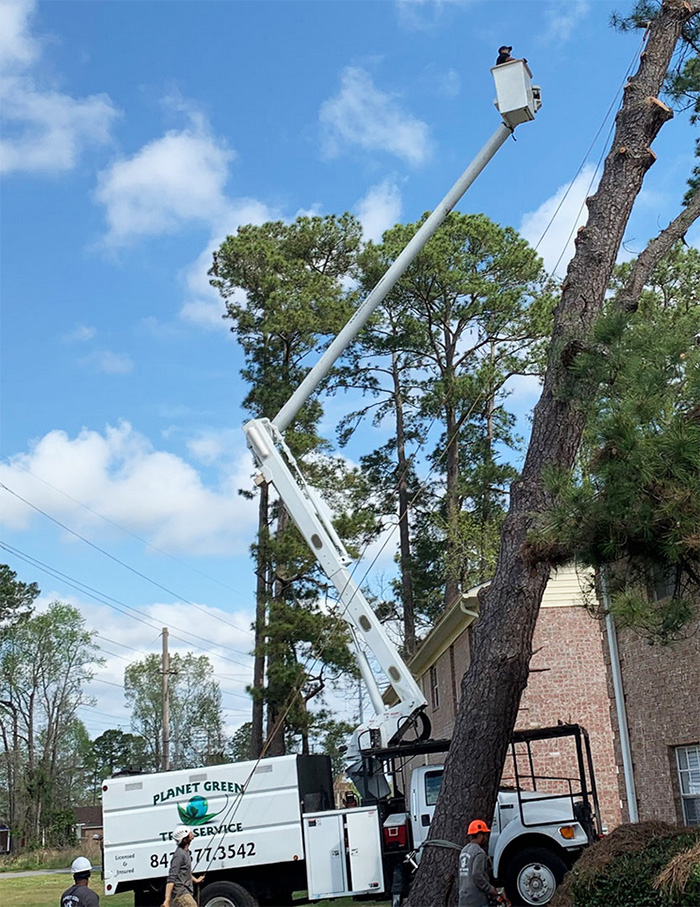
Whether your home has overgrown trees that need trimming or you have an unsightly stump that needs grinding, our team of tree experts is here to help. Curious what kind of tree care work we provide to homeowners in South Carolina?
Planet Green specializes in the following areas:
Tree Trimming in Isle of Palms
Have you noticed your favorite tree growing in a strange shape? Are your trees or shrubs so overgrown that it's making your property and home look unkempt? Are the trees near your home weighed down by dangerous dead branches? If you answered yes to any of the above questions, it might be time to speak with a Planet Green Tree Service professional to find a solution.
Like anything that lives, trees respond to their environment. When trees are not properly maintained, they can cause a whole host of problems for the homeowner. Overgrowth doesn't just look bad - it can be a potential safety hazard and liability for your home. To prevent this from happening, it's crucial that your trees are trimmed and pruned regularly. Trimming your trees and shrubs gives your home a tidy, appealing look and facilitates healthy plant and tree growth.
Because every tree and shrub is different, you must approach tree trimming with a plan. Before you start hacking at your trees with a machete, be sure to contact Planet Green Tree Service. Our team of expert arborists will come to your home and determine the best path to take for your tree trimming needs. We always take into account variables like the strengths, weaknesses, and species of your trees.
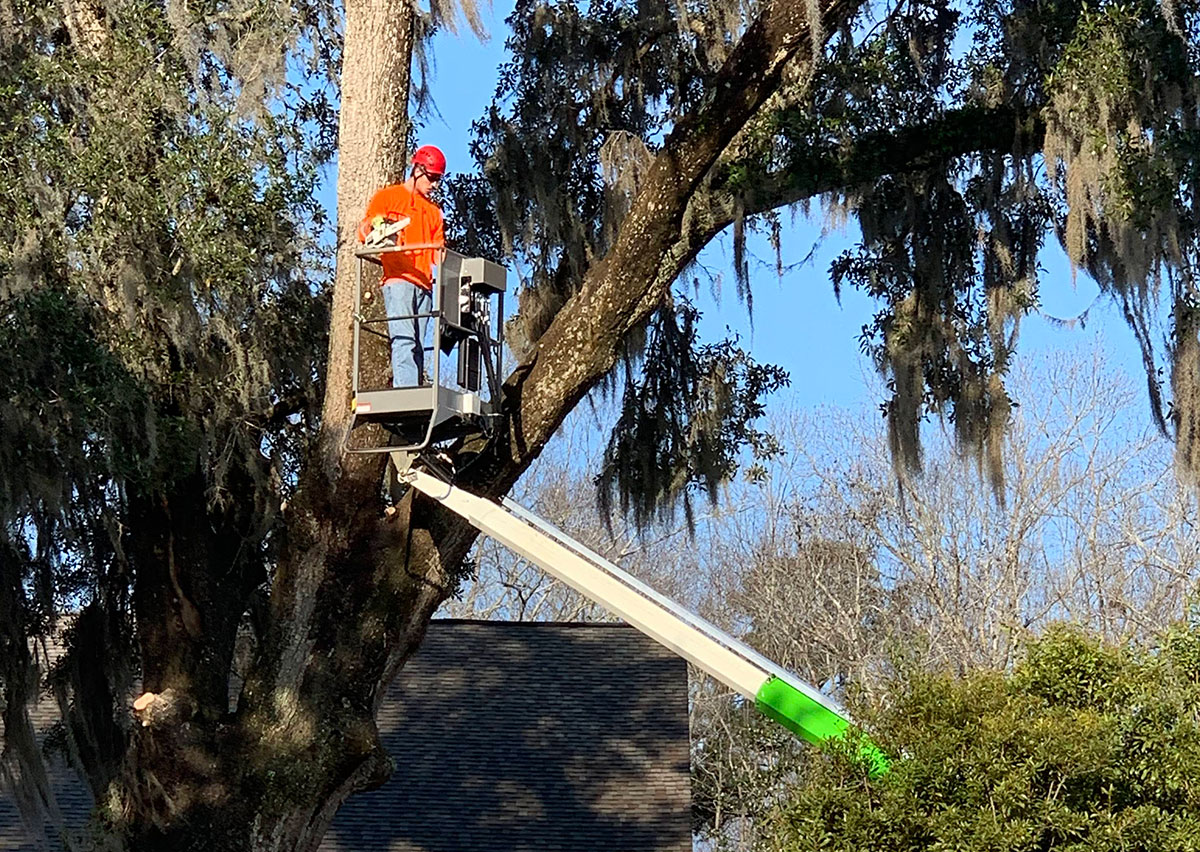
Benefits of Tree Trimming in Isle of Palms
For some folks, tree trimming seems like a minor detail in the grand scheme of homeownership. It can be a tedious job, but keeping your trees trimmed and well-maintained is more important than you might think. Below are just a few of the many benefits of keeping your trees and shrubs trimmed:

Tree Health
Part of the Planet Green pruning and trimming process includes the removal of damaged, broken, dead, and diseased branches. When ignored, these dead or dying branches can cause harmful fungi to wreak havoc on the trees around your home or business. Removing these weakened branches helps prevent fungi and keeps your trees healthy. In addition, tree trimming also lets more sunlight and air circulation reach your trees, boosting overall health.

Safety
As longtime residents of South Carolina, we know how dangerous hurricanes and heavy storms can be. Strong winds from these natural occurrences can cause branches to fall or even be carried away with significant force. This is concerning for many homeowners, especially those who have trees lining their driveways, recreational areas, and walking paths. When you trust Planet Green with your trimming needs, you are actually doing your part to "storm proof" your home from hazardous tree-related accidents. If you have low-hanging branches close to your roof or business, pruning these trees can provide more safety and overhead clearance. That way, don't have an anxiety attack every time a storm rolls through your neighborhood.

Aesthetics
Nobody likes the look of an overgrown, disheveled tree. Tree trimming improves the general appearance of your tree and makes your whole yard and home look better. Tree trimming also prevents your trees from growing weak branches and crotches and helps stop branches from intertwining with one another.

Developmental Tree Trimming
Pruning younger trees is key to protecting them as they age. This vital tree service in Isle of Palms keeps young trees aesthetically appealing and promotes proper structural integrity and optimal branch structure. In addition, as your home's landscape matures, taking the time to trim young trees reduces the chance of expensive problems like tree failure.
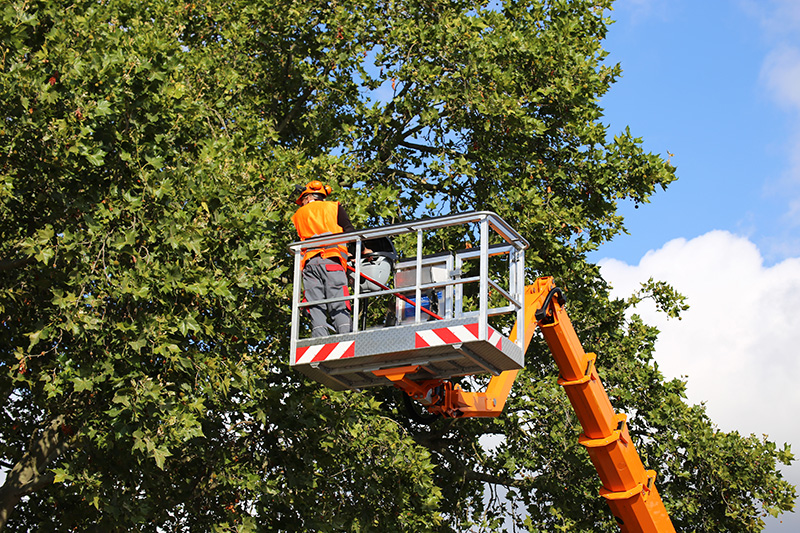
Types of Tree Trimming
Not all tree trimming services from Planet Green Tree Service are the same. Our experts specialize in a number of different tree trimming services to ensure you are getting the right kind of trim for the appropriate situation. Because even the smallest mistake can permanently affect your tree's health, we approach every tree trimming job with surgeon-like precision. That way, you know your trees are in capable, responsible hands.

Crown Reduction
When your trees age without the proper kind of care, they can develop too many branches on their interior. Trees like this give great shade, but too much is not a good sign. That's where crown reduction trimming comes in. By reducing the density of your tree's crown, our tree care experts improve its growth rate and health. Crown density reduction also promotes a longer lifespan and a more beautiful appearance.

Deadwooding
As the name implies, deadwooding involves the trimming of dead wood from your trees. Often required in urban and suburban areas, deadwooding a tree makes it look more attractive and livelier, while maintaining the health of your tree's trunk by removing rotted branches. This process also makes it safer for kids and other people who walk underneath or near your tree that may be harmed by rotting branches that fall. Other tree trimming services that Planet Green offers include: hazardous tree assessments, shrub trimming, pruning, cabling, bracing, and corrective trimming.
Stump Removal in Isle of Palms
For most property owners, removing a tree can seem like a major project. While that notion certainly isn't wrong, tree removal is more straightforward and often easier than trying to remove an unsightly stump from your yard. Have you ever wondered why you see so many yards with stumps dotted around the land? It's because they're very difficult to remove. That is why Planet Green Tree Service has been offering stump removal services in South Carolina for more than 33 years. Our skilled stump removal experts bring a wealth of knowledge and cutting-edge tools to every stump removal project they tackle.
The fact of the matter is this: trying to remove a stump on your own is an incredible undertaking. Going the "DIY" route can take weeks to complete, even if you spend an hour or two every day. There's also the issue of operating heavy machinery (which costs time and money to rent) and even light fires to expedite the process, which is dangerous. For these reasons alone, we always recommend that you bring in a professional to remove your tree stump safely and effectively.
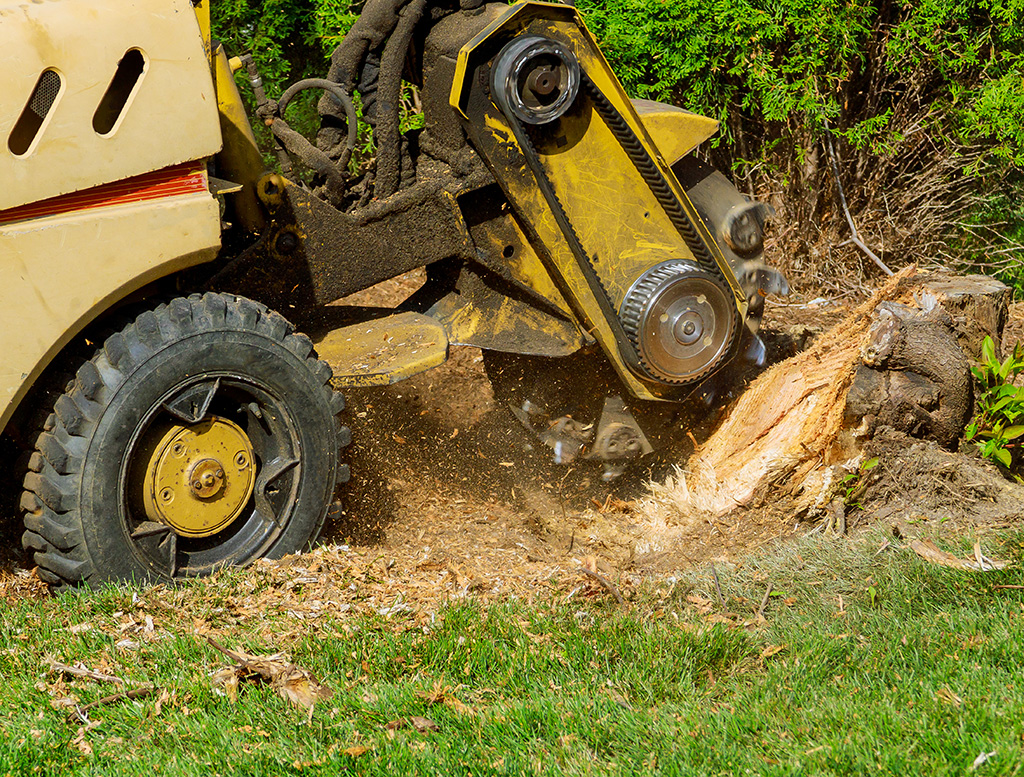
Benefits of Stump Removal in Isle of Palms

Better Looking Yard
If you are a homeowner that loves sculpted hedges, beautiful landscaping, and a tidy law, removing old tree stumps will feel like a huge weight off of your chest. Stump removal not only gives your home more curb appeal, it can actually raise the value of your home. This is particularly pertinent if you are thinking about listing your home for sale in the near future.

More Space
If your yard is small, even one stump can reduce the amount of space you have in your yard. If you spend a lot of time playing sports or just enjoying your yard space, stump removal is a huge help. After all, nobody wants to toss a football around if there are a bunch of old stumps that you must avoid. Stumps also take up considerable space below ground, with their complicated root systems. Stump removal will give you and your family more room to plant flowers, grow vegetables, install a water feature, and much more.

Eliminate Unwanted Growth
When you leave a tree stump in your yard, you could be setting yourself up for unwanted tree growth. This kind of new growth often results in clusters of small trees popping up around the base of the stump. This problem isn't just unsightly; it can be harmful to any plants near the stump because the new trees will suck up all the water and nutrients out of your soil.

Pest Prevention
Tree stumps are notorious for harboring all sorts of pests that can damage your hard and cause expensive problems in your home. We're talking wood borers, ants, termites, and beetles. If you want to do away with these pests and protect your home, the best course of action is to contact Planet Green Tree Service for a quote on our professional tree removal services.
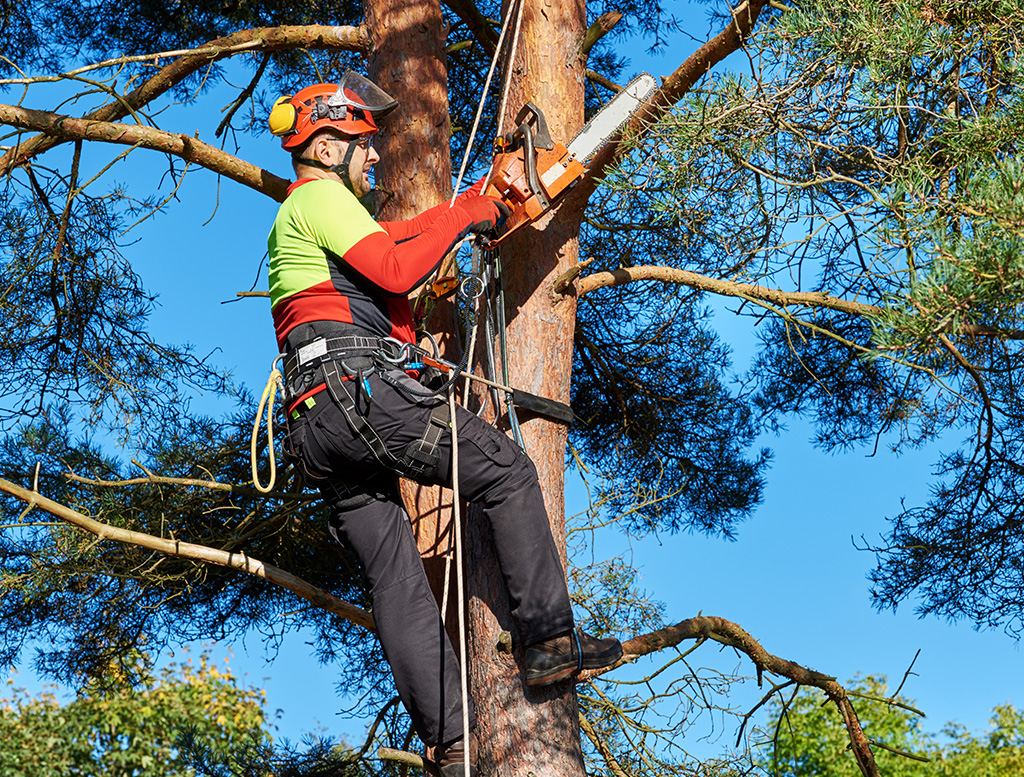
Reduce Headaches
Sure, you could take the time to do your research on how to remove a stump. You could go to Home Depot, rent a high-powered stump grinder, and risk your health trying to operate it without training. You could spend every winking moment of your free time trying to grind the stump down so you can remove it from your yard. But why go through all that trouble when a trustworthy, experienced stump removal company like Planet Green Tree Service is only a phone call away?
Our team of stump removal professionals uses state-of-the-art tools designed to keep your property damage-free during the removal process. We will turn your yard into a beautiful blank slate, so you can focus on enjoying your stump-free while we haul away all the debris.
Your Premier Tree Service Company in South Carolina
With 33 years of experience, it's no wonder why so many South Carolina locals choose Planet Green Tree Service for tree trimming and stump removal in their city. Clients love us because we believe in exceeding your expectations, no matter how large or small a job is.
- Conduct themselves in a professional manner
- Provide you with exemplary tree care services
- Arrive at your home or business on time and ready to work
- Provide you with affordable service rates
Contact our office to learn more about our tree services in South Carolina or to schedule your free quote today!
Latest News in Isle of Palms, SC
Isle of Palms noise ordinance up for discussion after questions from businesses
Meredith Blairhttps://www.live5news.com/2024/02/16/isle-palms-noise-ordinance-up-discussion-after-questions-businesses/
ISLE OF PALMS, S.C. (WCSC) - Big changes could be coming to the noise ordinance on Isle of Palms as city leaders hope to make the rules more clear.The city’s noise ordinance currently doesn’t list specific limits. A proposal would establish set decibel levels based on the time and day of the week as well as the area:Isle of Palms business owners got the chance to see the numbers and ask questions on Friday.“We want them to understand that they have a voice, we want to hear from them,” Police Chief...
ISLE OF PALMS, S.C. (WCSC) - Big changes could be coming to the noise ordinance on Isle of Palms as city leaders hope to make the rules more clear.
The city’s noise ordinance currently doesn’t list specific limits. A proposal would establish set decibel levels based on the time and day of the week as well as the area:
Isle of Palms business owners got the chance to see the numbers and ask questions on Friday.
“We want them to understand that they have a voice, we want to hear from them,” Police Chief Kevin Cornett said. “Anything that is going to impact businesses we want them to be able to come to us and say what they think about it.”
One area resident, who only identified himself as Paul, says the noise ordinance needs to have a balance.
“Obviously, late at night you don’t want people making a lot of noise walking up and down the streets while residents are trying to go to bed, but at the same time this is a vacation spot, so you have to have a little bit on leeway for people to enjoy themselves but also be respectful,” he said.
Cornett says they’re working to find a solution that will work for businesses and residents and increase livability for everyone.
Cornette says noise is a hot topic on the island and he values feedback on this from both residents and business owners.
“Everybody is very much invested in this conversation,” Cornett said. “The city council is taking it very seriously and they are going around and talking to people to get their input. So, I think they are doing a great job on making sure voices are heard so that when we get the final project it’s fair and something that will work for everybody.”
Officers use a calibrated decibel reader when called out to a noise complaint.
“That’s how we determine if it’s a violation and then we would take other factors into account like background noise to keep the realistic approach to is as well,” Cornett said.
The public safety committee has to create a final draft before it will head to the city council for two separate readings.
Copyright 2024 WCSC. All rights reserved.
Whose beach is it? Isle of Palms homeowner, state at odds over unauthorized 'sea wall'
Anna Sharpe asharpe@postandcourier.comhttps://www.postandcourier.com/news/illegal-seawall-isle-of-palms-iop-dhec-rom-reddy/article_f7ec7734-c6b3-11ee-a134-8b6c56b6ff22.html
ISLE OF PALMS — Record tides from an unexpected nor'easter in December ripped away several feet of sand on this barrier island, exposing an unauthorized, clandestine wall in front of a beachfront home near Breach Inlet.The wall's unveiling also spawned a power struggle between the state Department of Health and Environmental Control and the Ocean Boulevard homeowner, with the two at odds over property rights and protecting the diminishing shoreline....
ISLE OF PALMS — Record tides from an unexpected nor'easter in December ripped away several feet of sand on this barrier island, exposing an unauthorized, clandestine wall in front of a beachfront home near Breach Inlet.
The wall's unveiling also spawned a power struggle between the state Department of Health and Environmental Control and the Ocean Boulevard homeowner, with the two at odds over property rights and protecting the diminishing shoreline.
SC Climate and Environment News
This is all playing out on a sandy beach where waves are clawing closer to multi-million dollar homes amid heavy erosion caused by storms and high tides.
The home at the center of the dispute belongs to Rom Reddy, owner of the multimedia local news outlet MyLo News. After taking a beating from Hurricane Idalia last year, Reddy said he installed the wall as a erosion control barrier and covered it with 30 feet of sand.
The December nor'easter washed away the sand, uncovering the bulwark.
While performing post-storm damage assessments, DHEC became aware of the structure.
Some call it a sea wall, which the state defines as a retaining wall designed to withstand wave forces. Reddy maintains his wall isn't a sea wall, as it was never meant to be exposed to the ocean. It was meant to be buried beneath the sand to protect his home's foundation and yard, he said.
"This keeps my yard stable and keeps it from moving around, which is what a retaining wall does. If we have a catastrophic event, it gives my property some protection, although a very nominal level, because it's not meant to be ocean facing," Reddy said.
Reddy said the nor'easter left the wall tilting and unstable, prompting him to have it rebuilt. In response, DHEC sent a cease-and-desist letter in January to halt the construction.
Cease he did not. Construction on the wall continues to move full steam ahead and shows no sign of slowing down.
Reddy said it is his right as a property owner to protect his home. The area landward of the setback line is his to do with as he pleases, he said, citing South Carolina's Coastal Tidelands and Wetlands Act.
Not so, according to DHEC's division of Ocean and Coastal Resource Management.
The sand in front of Reddy's property is considered a critical area, the agency said, and any alteration of a critical area requires permits from OCRM, even critical areas that are landward of the jurisdictional setback.
DHEC spokesperson Laura Renwick said the agency regularly issues permits for work in these areas, though it is unlikely Reddy's wall would have been approved.
"Since erosion control structures and devices such as the one identified at this property have been banned per state law since 1988, this structure would not have been permitted," Renwick said.
Today's Top Headlines
Isle of Palms officials said they are aware of the structure, which violates a city ordinance prohibiting hard erosion control measures like sea walls, bulkheads and revetments. But in the case of Reddy's unauthorized structure, the city said its hands are tied. Jurisdiction of that area, and much of the island's critical areas, fall under DHEC, said Mayor Phillip Pounds.
"In this particular case, the OCRM has claimed jurisdiction, so that takes the city out of the mix, and it is up to them to enforce the state-level rules. We are relying on the state to enforce their rules that prevent structures like this being built per their cease-and-desist orders," Pounds said.
Judges in two cases in recent years have sided with homeowners who built walls or placed sandbags along eroding sections of the South Carolina coast.
While Reddy is facing pushback from DHEC, some of his neighbors are behind him. Paul Jorgensen, who owns the property adjacent to Reddy, said he doesn't love what is being erected next door, but he understands his neighbor's mindset. Working with the city and the state to get approval for protective measures has left him feeling frustrated.
"The city and the state have been utterly horrible at handling the situation. Not only have they been utterly horrible at managing, they won't even let us help ourselves," Jorgensen said.
Jorgensen said the preventative measures the city does take on aren't enough.
Ongoing restoration and protection efforts on the island include continuing sand scraping and sandbag placements on the island that began under an emergency order following Hurricane Idalia in September. City Council gave the efforts a boost in October, allotting $1.25 million to continue sand scraping along the beaches to rebuild the dunes. Council also budgeted $250,000 for installing sandbags on properties within 20 feet of erosion areas.
"The city and the state are not doing nearly enough, and, in fact, are preventing homeowners from protecting our own property," Jorgensen said.
South Carolina hasn't allowed structures like Reddy is building since enacting the Beachfront Management Act in 1988, citing a "false sense of security" the measures give to beachfront property owners while simultaneously aiding in further erosion.
Structures like sea walls block the ability of a wave to break naturally, pushing its force onto adjacent properties. The energy bounces back off of the wall, pulling the sand and eroding the beach on the seaward side. Emily Cedzo, director of conservation programs and policy for the Coastal Conservation League, said softer measures for preventing erosion, like sand fencing and larger restoration projects, are ideal for protecting beaches.
"Those are really the ideal ways to manage a beach responsibly so that it can provide good protection for private properties, but also public access and wildlife habitat," Cedzo said.
With multiple cease-and-desist directives, DHEC could begin to dole out fines or penalties.
"When DHEC identifies violations of applicable state laws or regulations, the agency has the authority to initiate an enforcement process that may result in the issuing of a civil penalty to the responsible party, among other actions," Renwick said.
Some think it's time for DHEC to take action.
"I think DHEC is going to have to move forward with enforcement. I don't know what their process or timeline looks like, but I think it's clear that they've already tried to communicate with the property owner," Cedzo said. "I know that several residents on the Isle of Palms are really concerned about it and continue sending reports."
Reddy said the cease-and-desist directives from DHEC won't deter him.
"They have to go in front of a judge and prove to the judge that we're, in fact, breaking the law. And we're ready for that," Reddy said.
Reach Anna Sharpe at 843-806-6790.
Isle of Palms homeowner’s ‘sea wall’ sparks controversy over property owner rights
Erin Morganhttps://www.counton2.com/news/the-investigators/isle-of-palms-homeowners-sea-wall-sparks-controversy-over-property-owner-rights/
ISLE OF PALMS, S.C. (WCBD) — As sea levels rise and strong storms impact coastal areas across the country, a battle is brewing on the Isle of Palms over what homeowners can do to protect their properties.One beachfront homeowner on the island, Rom Reddy, has taken matters into his own hands by building a wall that he says is protecting his property near Breach Inlet from beach erosion.This comes after Tropical Storm Idalia hit the Lowcountry coast in August 2023 and a lot of the beach behind homes on the Isle of Palms dis...
ISLE OF PALMS, S.C. (WCBD) — As sea levels rise and strong storms impact coastal areas across the country, a battle is brewing on the Isle of Palms over what homeowners can do to protect their properties.
One beachfront homeowner on the island, Rom Reddy, has taken matters into his own hands by building a wall that he says is protecting his property near Breach Inlet from beach erosion.
This comes after Tropical Storm Idalia hit the Lowcountry coast in August 2023 and a lot of the beach behind homes on the Isle of Palms disappeared.
For some homeowners, like Reddy, this meant part of their property is now regulated by the state because, under South Carolina law, the Dept. of Health and Environmental Control’s (DHEC) division of Ocean and Coastal Resource Management (OCRM) oversees critical areas, which includes beaches.
“If Idalia comes in and erodes the property line, they [OCRM] have jurisdiction,” Reddy explained. “Another storm comes in — Nor’easter erodes it further — they have jurisdiction.”
So to avoid losing control of any more of his property, Reddy took action and is building a structure in front of his home aimed at protecting him from further beach erosion. However, DHEC officials said they did not find out about it until a strong storm in December exposed it.
“DHEC investigated, and has since issued the property owner and contractor cease and desist directives related to this unauthorized structure,” the agency said in a statement.
A spokesperson also explained that anything built on critical areas of the coast, like beaches, needs a permit, and erosion control structures have been banned on South Carolina beaches since 1988.
Reddy is in the process of having the structure rebuilt after the storm in December exposed it. He maintains that he is within his constitutional right to protect his property, adding that the wall is landward of the state’s jurisdictional lines known as the setback and baselines that define the beach/dune system.
“So this is a landgrab by the state,” Reddy said. “Where they are saying your property — and it’s just not this — any waterfront property — they say ‘if a storm erodes it, I own it I have jurisdiction — no plants, no bushes, no fences, nothing — I can tell you what to do with it.'”
Rob Young, a geologist and professor at Western Carolina University, said DHEC and OCRM’s regulations are ensuring that everyone’s right to use the beaches is protected.
He explained that DHEC and OCRM have regulatory authorities over the beaches, coastal waters, and the beach/dune system, identified by the setback and baselines which are redrawn every 7-10 years.
“If you are buying an oceanfront property you need to understand what the limitations are and what you can and can’t do,” he explained. “For most beachfront lots in South Carolina that active beach is probably considered or a portion may be private property — but that doesn’t mean you can do whatever you want out there.”
Young said anything an oceanfront homeowner wants to do in the critical areas needs approval.
“This isn’t just a regulation from OCRM this is the Beachfront Management Act, it is the law of South Carolina,” he said.
Young also explained that structures like sea walls are banned from South Carolina beaches because state officials have found they can often do more harm than good.
“One of the reasons we do not permit seawalls is they have impacts on adjacent property owners,” he said. “Just imagine if everybody did whatever they wanted to one lot at a time — it would look terrible and you would have property owner suing property owner.”
Young said if homeowners are concerned about beach erosion, they need to come together and discuss long-term solutions like building dunes, beach nourishment projects, and developing a plan for regular beach nourishment projects.
There is currently a beach renourishment project ongoing near Reddy’s home following the storms in August and December 2023. However, Reddy believes Isle of Palms leaders dropped the ball before then.
“They are supposed to preserve, protect, enhance and renourish these beaches,” he said. “Prior to Idalia, there was not a lick of sand nothing done to this side of the beach since 2017.”
Isle of Palms leaders dispute these claims in a statement to News 2:
“Prior to 2023, the southwest end of the beach had been stable and accretional and only required periodic post-storm emergency berm repairs. The city has monitored this shoreline annually since 2009 and the area in question became highly erosional in 2023 due to numerous storm events and abnormally high tides. As soon as the shoreline eroded to the point that the conditions met the South Carolina regulatory standards to allow emergency work, the city began restoring dunes to provide better protection against structural damage.
The city has assisted with funding major renourishment projects and emergency protective measures. Last year, IOP City Council approved spending up to $1,890,000 to protect the public beach and property through a combination of emergency sand scraping, trucking in beach-compatible sand and placement of sandbags.
The current balance of the Beach Preservation Fund is $8.3M and it grows by approximately $1.8M annually. However, the city is forecasting a total need of almost $30M for beach projects in the next five to six years to be covered between public and private funding efforts.”
City leaders added there are also plans to work with the Army Corps of Engineers on a project that would place around 500,000 cubic yards of sand along the intertidal zone between Breach Inlet and 10th Avenue. They anticipate the project to start in March 2024 and be completed in four months.
However, Reddy is not waiting around for that work to be done.
“Every property owner has the right to protect their property — and no government no one can take it away from us because that’s the supreme law of the land,” he said.
New waterfront park coming to Isle of Palms this year
Autumn Kleinhttps://www.live5news.com/2024/02/05/new-waterfront-park-coming-isle-palms-this-year/
ISLE OF PALMS, S.C. (WCSC) - The Isle of Palms City Council in 2020 voted to make additions to the marina area of the island and that project is officially slated to be completed this year.The project included the addition of a public dock, a boardwalk and a waterfront park and greenspace. The boardwalk and public dock have been completed, and, as of Jan. 11, the construction contract for the waterfront park and greenspace was officially confirmed.The waterfront park will cover the 300 by 25 foot wide area along the marina faci...
ISLE OF PALMS, S.C. (WCSC) - The Isle of Palms City Council in 2020 voted to make additions to the marina area of the island and that project is officially slated to be completed this year.
The project included the addition of a public dock, a boardwalk and a waterfront park and greenspace. The boardwalk and public dock have been completed, and, as of Jan. 11, the construction contract for the waterfront park and greenspace was officially confirmed.
The waterfront park will cover the 300 by 25 foot wide area along the marina facing the Intracoastal Waterway. There will be a 6-foot wide concrete walkway. The park will include a large lawn area with lush planting.
They plan to include a series of benches along the waterfront walkway so residents can enjoy views of the water and boating activities. There are plans for a circular seat wall near the public dock that would create an entrance to the dock area.
They plan to include a kayak storage area and a kayak launch area. There will be golf cart parking available as well as bicycle parking areas.
All of these plans did require collaboration and participation from the marina manager and restaurant tenants. Scott Toole, the general manager of the Outpost, a nearby restaurant, says he is very excited for this addition to the area.
“I think that it’s an added benefit to the island, to the residents, everybody, to have a space and to use the dock. Kayak launching is a big thing that I think people will take advantage of.” he says. “It’s really going to help make this area kind of a place of interest for people, sort of a destination so to speak, for people to be able to get some food, get some drink, watch the water and use the dock that’s right there.”
Toole says they very recently renovated the Outpost and he’s excited to see this new project bring more people to the area. He says he feels like this area of Isle of Palms is often overlooked as it is a little ways away from the main beach.
“We’ve kind of joked that it’s a small corner of the island and so, anything that’s bringing people down this direction is good for everybody. We’re excited to see this project take place,” he says.
The project is currently slated to be completed by May of this year. To provide City Council your input on this project you can click here.
Copyright 2024 WCSC. All rights reserved.
Charleston Beach Foundation asks Isle of Palms, SCDOT to revoke parking plan
Caitlin Ashbaughhttps://www.live5news.com/2023/11/28/charleston-beach-foundation-asks-isle-palms-scdot-revoke-parking-plan/
ISLE OF PALMS, S.C. (WCSC) - The Charleston Beach Foundation is asking the city of Isle of Palms and South Carolina Department of Transportation to revoke current parking plans along beach access points.The group disclosed its concerns in a letter on November 27, claiming the “general public is being denied their constitutional guaranty of equality and privilege.”Isle of Palms City Council put the regulations into place in 2015 with the goal of making the beaches functional and safe.The 2015 parking plan, ame...
ISLE OF PALMS, S.C. (WCSC) - The Charleston Beach Foundation is asking the city of Isle of Palms and South Carolina Department of Transportation to revoke current parking plans along beach access points.
The group disclosed its concerns in a letter on November 27, claiming the “general public is being denied their constitutional guaranty of equality and privilege.”
Isle of Palms City Council put the regulations into place in 2015 with the goal of making the beaches functional and safe.
The 2015 parking plan, amended in 2017, cost $250,000 in taxpayer dollars and is modeled off similar plans in both Charleston and Columbia.
The city claims the plan was made to manage “unbridled growth” in the region, both nearby in Charleston and further out in the Lowcountry.
Activists say it does not match up with the increase in commercial use of the island or overall population growth.
“Revoke the 2015 parking plan on Isle of Palms, return all residential-only parking spaces on both Sullivans Island and Isle of Palms back to the general public,” Michael Barnett says.
Barnett says the plan eliminated a number of free spots and instead gave them to short-term rentals in nearby neighborhoods.
The Charleston Beach Foundation also claims the area has since become a hot spot for commercial use, with the city voting in a referendum on Nov. 7 to not limit short-term rental licenses.
“They were really the first to do it. They started to do it piece by piece, which really got my attention because I was a surfer,” Barnett says. “Businesses are operating in these areas. Not basically, they are. They’re not residential neighborhoods anymore.”
City officials weighed in on the matter.
“We are very much a residential community. Certainly, in season, we have a lot more visitors than we do residents. But we provide eight times the among of parking required by the state,” Isle of Palms Mayor Phillip Pounds says.
Pounds says the island offers an abundance of free parking with the current plan, scattered around 56 beach access points.
“It’s not about increasing revenues, being punitive. It’s about making sure every spaces available can be used properly.”
The foundation mentioned encroachment and “excessive fines” as to why the plan should be reworked.
“Why would a parking ticket for parking in a residential area, or having your tires on the road, be 3x the state average on Isle of Palms?” Barnett says.
Pounds says the plan is set in place for now.
“We can’t do anything without approval and oversight, and we have a really good relationship with SCDOT. If there were any changes we were looking to make, we’d certainly have to work in conjunction with them,” Pounds says.
The SCDOT and Isle of Palms City Council both say they are starting the initial review process for the Charleston Beach Foundation’s request.
Copyright 2023 WCSC. All rights reserved.
Disclaimer: