
Best Tree Service in Wild Dunes
Ask Us Anything!
Quick Quote
The Planet Green Tree Service Difference
At Planet Green Tree Service, we are firm believers that trees make the world a better place. They provide us with verdant beauty, cool shade, and emergency shelter. They raise our home values, add personality to our neighborhoods, and provide us with clean air to breathe. When your home or business has well-maintained, healthy trees, everyone benefits. That's why we are so passionate about providing our customers with dependable tree services in the Lowcountry.
We believe that honest prices, state-of-the-art equipment, friendly arborists, and good old-fashioned hard work are what set us apart from our competition. With more than 33 years of service in South Carolina, you can rest easy knowing every member of the Planet Green team is committed to the following:
- Conduct themselves in a professional manner
- Provide you with exemplary tree care services
- Arrive at your home or business on time and ready to work
- Provide you with affordable service rates
- Meet or exceed our industry standards
- Utilize the utmost safety when removing or maintaining your trees or shrubs
- Have full insurance to protect themselves and your home
Our customers mean a lot to us, which is why we strive to provide them the best, most helpful customer service in our industry. When you hire our company to perform a tree service in cityname, know that we take this responsibility seriously and will always treat your home like we would treat our own. At Planet Green Tree Service, you won't ever have to worry about sneaky hidden fees or outrageous pricing. We believe every homeowner and business owner should have access to affordable tree services, which is why we set our rates at reasonable levels. Our job is to protect your home, your trees, and also your wallet!
Service Areas
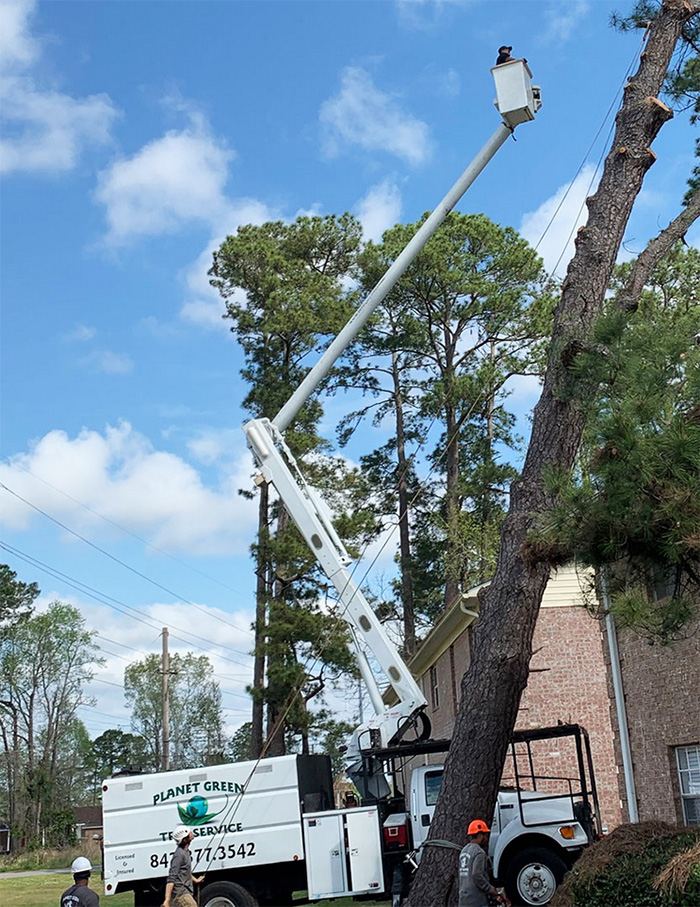
Whether your home has overgrown trees that need trimming or you have an unsightly stump that needs grinding, our team of tree experts is here to help. Curious what kind of tree care work we provide to homeowners in South Carolina?
Planet Green specializes in the following areas:
Tree Trimming in Wild Dunes
Have you noticed your favorite tree growing in a strange shape? Are your trees or shrubs so overgrown that it's making your property and home look unkempt? Are the trees near your home weighed down by dangerous dead branches? If you answered yes to any of the above questions, it might be time to speak with a Planet Green Tree Service professional to find a solution.
Like anything that lives, trees respond to their environment. When trees are not properly maintained, they can cause a whole host of problems for the homeowner. Overgrowth doesn't just look bad - it can be a potential safety hazard and liability for your home. To prevent this from happening, it's crucial that your trees are trimmed and pruned regularly. Trimming your trees and shrubs gives your home a tidy, appealing look and facilitates healthy plant and tree growth.
Because every tree and shrub is different, you must approach tree trimming with a plan. Before you start hacking at your trees with a machete, be sure to contact Planet Green Tree Service. Our team of expert arborists will come to your home and determine the best path to take for your tree trimming needs. We always take into account variables like the strengths, weaknesses, and species of your trees.
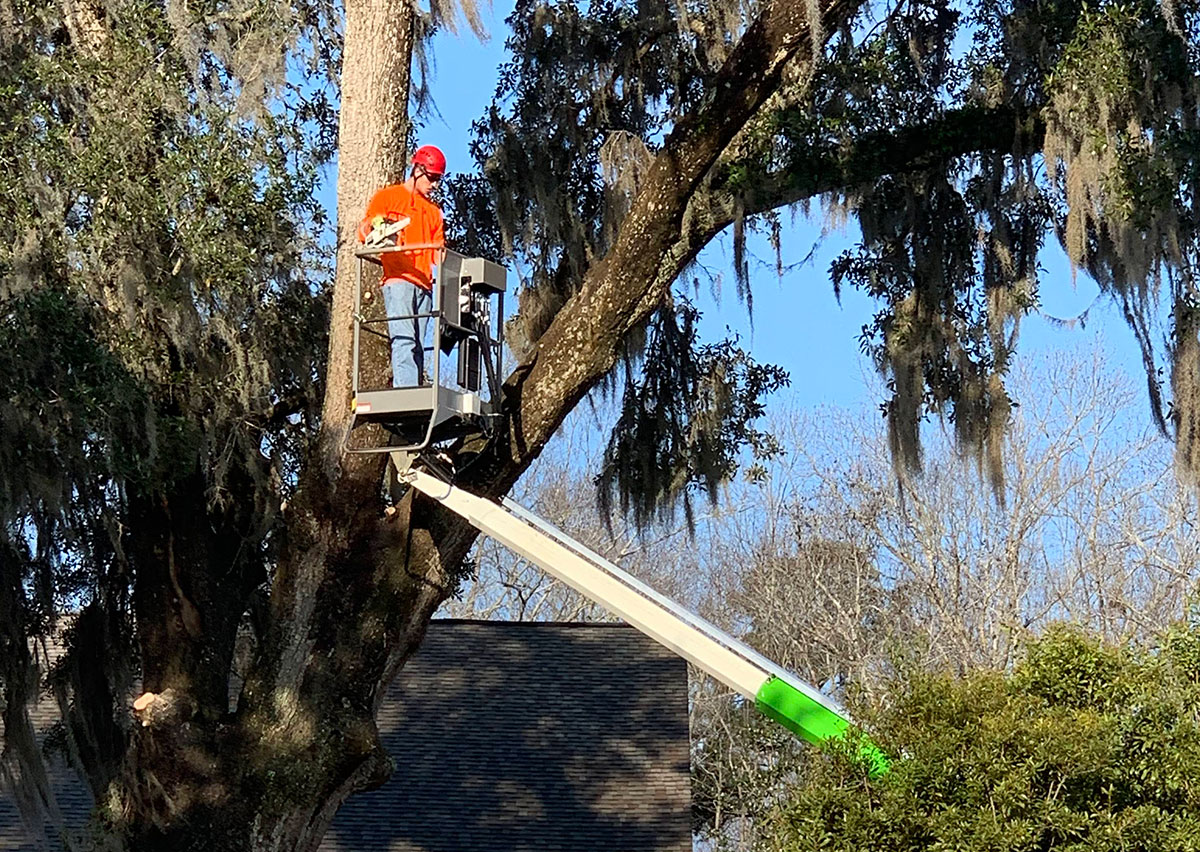
Benefits of Tree Trimming in Wild Dunes
For some folks, tree trimming seems like a minor detail in the grand scheme of homeownership. It can be a tedious job, but keeping your trees trimmed and well-maintained is more important than you might think. Below are just a few of the many benefits of keeping your trees and shrubs trimmed:

Tree Health
Part of the Planet Green pruning and trimming process includes the removal of damaged, broken, dead, and diseased branches. When ignored, these dead or dying branches can cause harmful fungi to wreak havoc on the trees around your home or business. Removing these weakened branches helps prevent fungi and keeps your trees healthy. In addition, tree trimming also lets more sunlight and air circulation reach your trees, boosting overall health.

Safety
As longtime residents of South Carolina, we know how dangerous hurricanes and heavy storms can be. Strong winds from these natural occurrences can cause branches to fall or even be carried away with significant force. This is concerning for many homeowners, especially those who have trees lining their driveways, recreational areas, and walking paths. When you trust Planet Green with your trimming needs, you are actually doing your part to "storm proof" your home from hazardous tree-related accidents. If you have low-hanging branches close to your roof or business, pruning these trees can provide more safety and overhead clearance. That way, don't have an anxiety attack every time a storm rolls through your neighborhood.

Aesthetics
Nobody likes the look of an overgrown, disheveled tree. Tree trimming improves the general appearance of your tree and makes your whole yard and home look better. Tree trimming also prevents your trees from growing weak branches and crotches and helps stop branches from intertwining with one another.

Developmental Tree Trimming
Pruning younger trees is key to protecting them as they age. This vital tree service in Wild Dunes keeps young trees aesthetically appealing and promotes proper structural integrity and optimal branch structure. In addition, as your home's landscape matures, taking the time to trim young trees reduces the chance of expensive problems like tree failure.
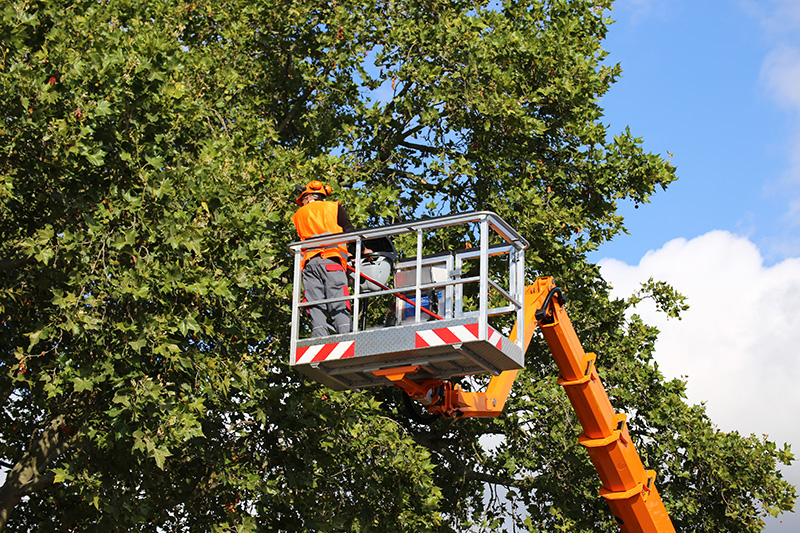
Types of Tree Trimming
Not all tree trimming services from Planet Green Tree Service are the same. Our experts specialize in a number of different tree trimming services to ensure you are getting the right kind of trim for the appropriate situation. Because even the smallest mistake can permanently affect your tree's health, we approach every tree trimming job with surgeon-like precision. That way, you know your trees are in capable, responsible hands.

Crown Reduction
When your trees age without the proper kind of care, they can develop too many branches on their interior. Trees like this give great shade, but too much is not a good sign. That's where crown reduction trimming comes in. By reducing the density of your tree's crown, our tree care experts improve its growth rate and health. Crown density reduction also promotes a longer lifespan and a more beautiful appearance.

Deadwooding
As the name implies, deadwooding involves the trimming of dead wood from your trees. Often required in urban and suburban areas, deadwooding a tree makes it look more attractive and livelier, while maintaining the health of your tree's trunk by removing rotted branches. This process also makes it safer for kids and other people who walk underneath or near your tree that may be harmed by rotting branches that fall. Other tree trimming services that Planet Green offers include: hazardous tree assessments, shrub trimming, pruning, cabling, bracing, and corrective trimming.
Stump Removal in Wild Dunes
For most property owners, removing a tree can seem like a major project. While that notion certainly isn't wrong, tree removal is more straightforward and often easier than trying to remove an unsightly stump from your yard. Have you ever wondered why you see so many yards with stumps dotted around the land? It's because they're very difficult to remove. That is why Planet Green Tree Service has been offering stump removal services in South Carolina for more than 33 years. Our skilled stump removal experts bring a wealth of knowledge and cutting-edge tools to every stump removal project they tackle.
The fact of the matter is this: trying to remove a stump on your own is an incredible undertaking. Going the "DIY" route can take weeks to complete, even if you spend an hour or two every day. There's also the issue of operating heavy machinery (which costs time and money to rent) and even light fires to expedite the process, which is dangerous. For these reasons alone, we always recommend that you bring in a professional to remove your tree stump safely and effectively.
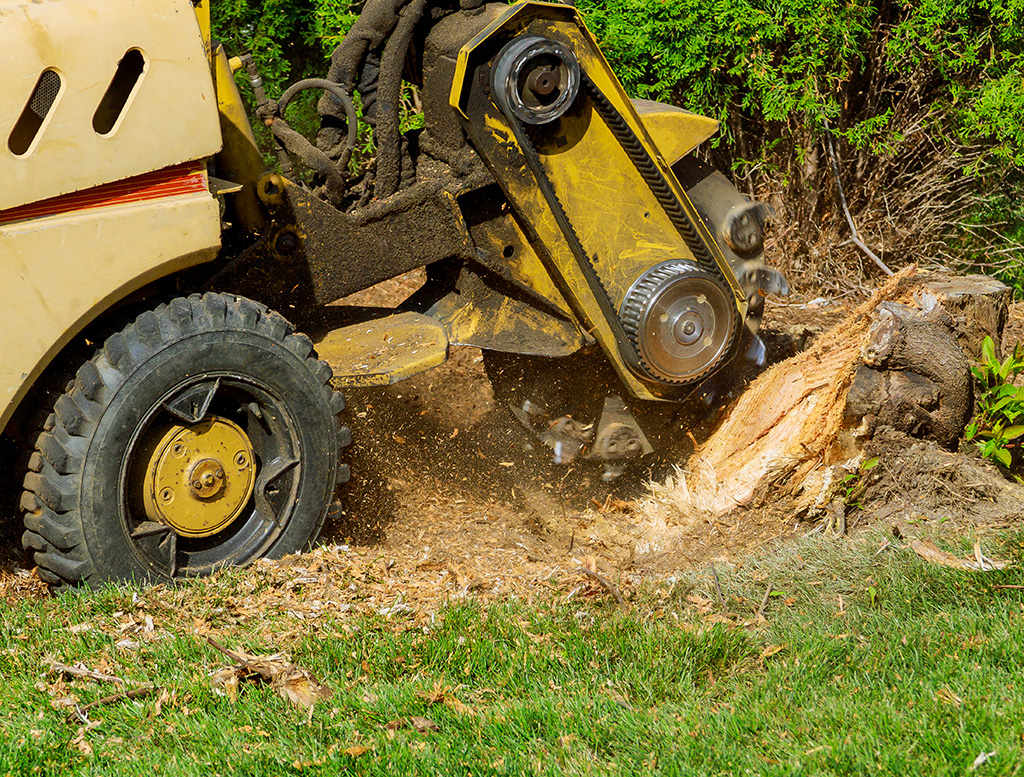
Benefits of Stump Removal in Wild Dunes

Better Looking Yard
If you are a homeowner that loves sculpted hedges, beautiful landscaping, and a tidy law, removing old tree stumps will feel like a huge weight off of your chest. Stump removal not only gives your home more curb appeal, it can actually raise the value of your home. This is particularly pertinent if you are thinking about listing your home for sale in the near future.

More Space
If your yard is small, even one stump can reduce the amount of space you have in your yard. If you spend a lot of time playing sports or just enjoying your yard space, stump removal is a huge help. After all, nobody wants to toss a football around if there are a bunch of old stumps that you must avoid. Stumps also take up considerable space below ground, with their complicated root systems. Stump removal will give you and your family more room to plant flowers, grow vegetables, install a water feature, and much more.

Eliminate Unwanted Growth
When you leave a tree stump in your yard, you could be setting yourself up for unwanted tree growth. This kind of new growth often results in clusters of small trees popping up around the base of the stump. This problem isn't just unsightly; it can be harmful to any plants near the stump because the new trees will suck up all the water and nutrients out of your soil.

Pest Prevention
Tree stumps are notorious for harboring all sorts of pests that can damage your hard and cause expensive problems in your home. We're talking wood borers, ants, termites, and beetles. If you want to do away with these pests and protect your home, the best course of action is to contact Planet Green Tree Service for a quote on our professional tree removal services.
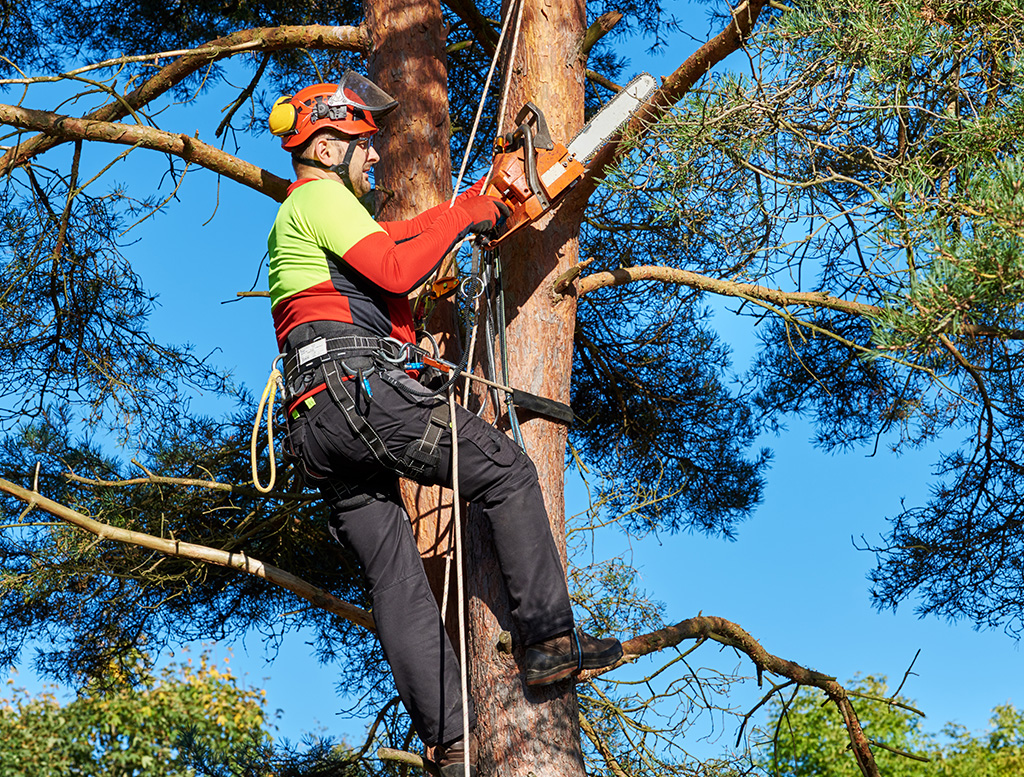
Reduce Headaches
Sure, you could take the time to do your research on how to remove a stump. You could go to Home Depot, rent a high-powered stump grinder, and risk your health trying to operate it without training. You could spend every winking moment of your free time trying to grind the stump down so you can remove it from your yard. But why go through all that trouble when a trustworthy, experienced stump removal company like Planet Green Tree Service is only a phone call away?
Our team of stump removal professionals uses state-of-the-art tools designed to keep your property damage-free during the removal process. We will turn your yard into a beautiful blank slate, so you can focus on enjoying your stump-free while we haul away all the debris.
Your Premier Tree Service Company in South Carolina
With 33 years of experience, it's no wonder why so many South Carolina locals choose Planet Green Tree Service for tree trimming and stump removal in their city. Clients love us because we believe in exceeding your expectations, no matter how large or small a job is.
- Conduct themselves in a professional manner
- Provide you with exemplary tree care services
- Arrive at your home or business on time and ready to work
- Provide you with affordable service rates
Contact our office to learn more about our tree services in South Carolina or to schedule your free quote today!
Latest News in Wild Dunes, SC
The 10 Best Beachfront Hotels In South Carolina
Lisa Cericolahttps://www.southernliving.com/best-beachfront-hotels-in-south-carolina-8580518
Find the perfect stay for the South Carolina beach trip of your dreams.South Carolina’s coastal towns are not only full of charm, they offer beaches and hotels to suit every type of traveler. From bustling Myrtle Beach with its shops, restaurants, and attractions for all ages, to peaceful and pristine spots like Paw...
Find the perfect stay for the South Carolina beach trip of your dreams.
South Carolina’s coastal towns are not only full of charm, they offer beaches and hotels to suit every type of traveler. From bustling Myrtle Beach with its shops, restaurants, and attractions for all ages, to peaceful and pristine spots like Pawley’s Island, you can plan a beach trip here that’s just your speed.
Finding the right hotel is key, especially if you’re looking for activities and amenities beyond having the ocean steps away from your door. South Carolina is home to lavish resorts (and even a private resort island) that offer championship golf courses, spas, and just about every customized experience you could ask for, from falconry lessons to kayak trips. If you’re looking for something more simple, we have suggestions for old-fashioned beach bungalows and hotels for a fun and nostalgic beach trip. And for those traveling with kids, there are family-friendly resorts and hotels aplenty—one even has two waterparks.
One thing all of these stays have in common is that you’ll be located right on the beach. So whatever you choose, you really can't go wrong!
Surfside Beach: Surfside Hotel
Located on the “Grand Strand” between Myrtle Beach and Pawleys Island, Surfside Hotel is a laid-back stay that will remind you of the simple beach vacations of your childhood. This property isn’t packed with luxurious amenities, but it has everything you need for a fun and relaxing stay. There’s a pool and a hot tub, rooms and suites with ocean views, and private beach access. Plus, you can head right next door to Scotty’s Beach Bar for tropical cocktails (and lunch and dinner) on an outdoor patio.
surfsideoceanfronthotel.com; 15 South Ocean Boulevard, Surfside Beach, SC; 843-238-4444
Folly Beach: Tides Folly Beach
If you’re looking for a laid-back beach trip that only requires you to pack one pair of flip flops, Folly Beach fits the bill. And Tides Folly Beach is a comfortable and convenient place to rest your head while you’re there. Each room has an ocean view and either a private balcony or patio. There’s a heated oceanfront pool, a tiki bar, and pets are welcome. When you’re ready for a break from the beach, the hotel is within easy walking distance of plenty of shops and restaurants.
tidesfollybeach.com; 1 Center Street, Folly Beach, SC; 843-588-6464
Isle of Palms: Wild Dunes Resort
Whether you’re traveling with a group or just the two of you, Wild Dunes is a massive resort complex on the Isle of Palms that offers just about every type of accommodations you could imagine, plus amenities including multiple pools (for kids and adults), a spa, and two Tom Fazio-designed golf courses. Sweetgrass Inn, the resort’s newest addition, offers beachfront rooms and suites, as does The Boardwalk Inn. Or, for more privacy, rent a vacation home or condo within the property.
destinationhotels.com/wild-dunes; 5757 Palm Blvd, Isle of Palms, SC; 866-359-5593
Myrtle Beach: Marina Inn at Grande Dunes
A stay at Marina Inn at Grande Dunes comes with private beach access, but that’s just one of many perks that this hotel offers its guests. Enjoy spacious indoor and outdoor pools, the Hibiscus Spa, on-site dining options, a fitness center, and more. The hotel provides guests with beach umbrellas, chairs, and towels. The location is great, too. The Marina Inn is right near The Marina Parkway trails for walking and running, Myrtle Beach Water Sports where you can rent jet skis and pontoon boats, and the 18-hole Grande Dunes Resort Course.
marinainnatgrandedunes.com/beachclub; 8121 Amalfi Place, Myrtle Beach, SC; 843-913-1333
Myrtle Beach: Dunes Village Resort
If the words “lazy river” make you instantly feel relaxed, head to Dunes Village Resort. The property, which bills itself as “Myrtle Beach's favorite waterpark resort,” has two indoor water parks with slides, whirlpools, fountains, and swimming pools for everyone. There are four on-site dining options, a fitness center, and plenty of activities for kids. And, of course, the beach is just outside the hotel’s doors, once you’ve had your fill of waterslides.
dunesvillage.com; 5200 North Ocean Blvd, Myrtle Beach, SC; 855-340-7301
Hilton Head Island: Palmetto Dunes Oceanfront Resort
This beautiful Hilton Head property offers the perks of a resort, with all the comforts of home (and more). Three miles of sweeping ocean views offer plenty of room to spread out and soak in the sun. And with multiple restaurants, a full-service marina, two lakes, a lagoon, a tennis center, and three golf courses, you can be as busy or as relaxed as you’d like at Palmetto Dunes Oceanfront Resort. Choose from a villa, condo, or house rental—many come with their own pools. All the lodging options offer more privacy and space than a hotel, making them ideal for families or groups.
palmettodunes.com; 4 Queens Folly Rd, Hilton Head Island, SC
Hilton Head Island: Omni Hilton Head
This family-friendly hotel is ideal for travelers who like to stay active. Choose from 25 tennis courts, three pools (one is adults-only), volleyball, kayaking, canoeing, and access to Palmetto Dune’s 54-hole golf course. And that’s not even counting the beautiful white sand beaches. If you do find that you need a little downtime, the on-site spa offers massages, facials, body treatments, and more. With the Omni’s six dining options, you’ve got everything you need for an unforgettable vacation under one roof.
omnihotels.com/hiltonhead; 23 Ocean Lane, Hilton Head, SC; 843-842-8000
Hilton Head Island: Disney Hilton Head Resort
You probably don’t associate South Carolina with Disney, but the famed company actually has a resort in Hilton Head that’s as family-friendly as the theme parks themselves. Situated on 12 miles of beach, the property is inspired by a “1940s hunting and fishing lodge.” Kids will love the enormous pool with a waterslide, old timey general store, and dolphin-watching boat tours. Grown-ups will appreciate the cozy Live Oak Lodge, golf course, and fitness center. Rooms have views of the woodlands or the ocean, and range from studios to two-bedroom villas.
hiltonhead.disney.go.com; 22 Harbourside Lane, Hilton Head, SC; 843-341-4100
Pawley’s Island: Sea View Inn
This old-school, family-run stay calls itself “a barefoot paradise since 1937.” The Sea View Inn isn’t as fancy as other lodging options along the South Carolina coast, but it is a special one. With just 20 rooms, Lowcountry cooking (breakfast and dinner is included for guests), and the beach just steps away, this is the kind of place where you can really get away from it all.
Choose from three types of rooms: oceanside, oceanfront, or cottage rooms. With quilts on the beds and wooden floors and walls, rooms at this inn are like stepping back in time in the best way.
seaviewinn.net; 414 Myrtle Avenue, Pawleys Island, SC; 843-237-4253
Kiawah Island: The Sanctuary at Kiawah Island Golf Resort
Open since 2004, this grand four-story hotel is a luxurious getaway. Obviously, golf is a major draw here—there are five beautiful championship courses on the property—but that’s not all this resort has to offer. Get pampered at The Spa at The Sanctuary, explore nature with a guided kayak tour, take a swim in one of two pools (one is reserved for adults only), or stroll the pristine coastline. There are three restaurants–a steakhouse, a Lowcountry-inspired restaurant, and a poolside grill–plus a cafe, ice cream shop, and bar.
There are four ways to stay here: The Sanctuary Hotel (with 255 rooms), private villas and homes, and the Cottages at the Ocean Course. Each option is decorated in Lowcountry coastal style and furnished with everything you could ever need. (And if not, a concierge is never far away.)
kiawahresort.com; One Sanctuary Beach Drive, Kiawah Island, SC; 800-654-2924
South Carolina Coastal Resort Tees Up An $8 Million Spending Plan For Its Two Golf Courses
Megan Fernandeshttps://www.mylolowcountry.com/the-island-eye-news/living/south-carolina-coastal-resort-tees-up-an-8m-spending-plan-fo/
An Isle of Palms vacation getaway is undertaking a multimillion-dollar renovation of its two 18-hole golf layouts, adding to a recent string of investments in the seaside property.Wild Dunes Resort announced this week it will spend $8 million on the upgrades starting in March.Only the 37-year-old Harbor Course will need to be closed during the project, which will mark the first major tee-to-green renovation for the 18-hole property. It’s expected to reopen in October 2024.Jeff Minton, director of golf at Wild Dunes...
An Isle of Palms vacation getaway is undertaking a multimillion-dollar renovation of its two 18-hole golf layouts, adding to a recent string of investments in the seaside property.
Wild Dunes Resort announced this week it will spend $8 million on the upgrades starting in March.
Only the 37-year-old Harbor Course will need to be closed during the project, which will mark the first major tee-to-green renovation for the 18-hole property. It’s expected to reopen in October 2024.
Jeff Minton, director of golf at Wild Dunes, said players can expect to see a revamped Harbor Course next fall, with newly designed putting surfaces, upgraded cart paths and bridges and new bunkers.
Also, he said, the existing irrigation system will be replaced to improve turf conditions and water-use efficiency.
Both of the courses, which are open to the public, were designed by noted architect Tom Fazio, whose staff was tapped to help with the latest project.
The Harbor layout will largely remain the same, with the exception of adding some features.
The work on the Links Course, which was opened in 1979 and was renovated in 2015, will focus on the exposed oceanfront 18th hole, which has been affected by erosion and washout.
Minton said the closing stretch is “at the mercy of Mother Nature” so designers are looking how it can be reconstructed.
Wild Dunes has been owned for years by Lowe, a Los Angeles real estate investment firm. Dallas-based Dart Interests, a family-owned company, bought a stake in the 1,600-acre property in 2018.
Together, their joint venture has invested more than $150 million into the golf and tennis getaway over the past few years, including the completion of the 153-room Sweetgrass Inn and conference center. Earlier this year, Wild Dunes added five pickleball courts in response to the sport’s fast-growing popularity.
SC resorts and hotels are picking up pickleball as new business priority resorts and hotels are picking up pickleball as new business priority. “After years of continued improvements to the property with our guests and members in mind, enhancing our overall golf product was the natural next step,” said Tom Nolan, managing director.
The game is a major economic driver for the tourism industry, especially along the coast from the Grand Strand to Hilton Head Island. Its financial impact based on spending both on and off the fairways was estimated at $3.3 billion in a 2021 economic analysis.
The state continues to invest heavily to promote South Carolina as a premier golf destination.
Minton said the rise of Topgolf and other simulator venues has helped boost demand by introducing the swing basics to more potential participants.
“We’ve seen more new players who are sticking with the game, and that’s a great thing for the sport long term,” he said. “The regulars are always going to come back and play, but it’s great to see more people seeing that golf is something anyone at any skill level can enjoy.”
Wild Dunes Resort Hires New Director of Pickleball
MyLo Lowcountryhttps://www.mylolowcountry.com/the-island-eye-news/outdoors/wild-dunes-resort-hires-new-director-of-pickleball/
Nestled on the northern tip of Island of Palms, Wild Dunes Resort - a destination by Hyatt, has announced the hire of Damien Spizzo as its Director of Pickleball.The ultimate tennis and pickleball vacation destination for those seeking to improve or learn new skills on the court, Wild Dunes Resort has been ranked 10 years in a row among the Top 10 Tennis Resorts in the U.S by Tennis Magazine, and currently holds the ranking of No. 2 best tennis ...
Nestled on the northern tip of Island of Palms, Wild Dunes Resort - a destination by Hyatt, has announced the hire of Damien Spizzo as its Director of Pickleball.
The ultimate tennis and pickleball vacation destination for those seeking to improve or learn new skills on the court, Wild Dunes Resort has been ranked 10 years in a row among the Top 10 Tennis Resorts in the U.S by Tennis Magazine, and currently holds the ranking of No. 2 best tennis resort in the world and the No. 4 best pickleball resort.
“Wild Dunes is thrilled to welcome Damien as our new Director of Pickleball,” said Wild Dunes Resort Director of Tennis, Clayton Langheim. “With Pickleball taking the world by storm, Damien will tremendously continue to enhance the Wild Dunes tennis and pickleball reputation.”
The sport has grown tremendously at Wild Dunes Resort over the last year, offering four newly added pickleball courts and various clinics for beginner and advanced levels, as well as private and group lessons and social and competitive open play for different levels along with an on-site pro shop.
“I couldn’t be more excited to join the Wild Dunes Team and a top 5 pickleball resort,” says Spizzo. “Our ever-present goal will be to continue to enhance our facilities and provide the best experience for our guests as we work toward becoming the No. 1 resort for both tennis and pickleball.”
As a tennis player, Spizzo was part of the NCAA 2002 Division 1 USC Trojans Championship tennis team at the Univ. of Southern California and later part of the 2004 ALL SEC 1st tennis team and 2004 All American at the University of Tennessee before switching gears to coaching. Having coached more than 100 Division 1 Athletes, his passion for tennis peaked his interest in pickleball. In 2021, Spizzo became a pickleball coach and in 2022 achieved a Top 25 Professional World Ranking as part of Professional Pickleball Association (PPA), while simultaneously coaching three of the top 10 Men’s Single Players in tennis. Spizzo is also a Tennis insider for ESPN Radio.
To learn more about Wild Dunes Resort, please visit www.wilddunesresort.com or follow along on Facebook, Twitter, Instagram and YouTube.
About Wild Dunes Resort
Located 30 minutes from the charm and grace of historic downtown Charleston, Wild Dunes Resort occupies 1,600 acres of oceanfront paradise along the Atlantic shores offering various accommodations including the new, coastal-modern Sweetgrass Inn; the beloved AAA Four-Diamond-rated Boardwalk Inn; spacious Residences at Sweetgrass guestrooms, suites, and penthouses; and a collection of private condos and vacation home rentals. With 36 holes of Tom Fazio-designed championship golf year-round, internationally ranked tennis, bike rentals, a world-class spa, an on-site art gallery, resort pools and an array of restaurants and bars, Wild Dunes is an ideal retreat for families, couples, groups and more – offering a little something for everyone.
For more information, please visit www.wilddunes.com or visit Wild Dunes Resort online on Facebook, Twitter, Instagramand YouTube.
Wild Dunes suing IOP over development restrictions
Chase Laudenslagerhttps://www.counton2.com/lowcountry-beaches/wild-dunes-suing-iop-over-development-restrictions/
ISLE OF PALMS, S.C. (WCBD) – Wild Dunes Resort on Thursday filed a lawsuit against the Isle of Palms (IOP) for enacting ordinances which limit the resort’s development.Five ordinances were passed in November which proponents said protected the city&...
ISLE OF PALMS, S.C. (WCBD) – Wild Dunes Resort on Thursday filed a lawsuit against the Isle of Palms (IOP) for enacting ordinances which limit the resort’s development.
Five ordinances were passed in November which proponents said protected the city’s greenspaces. The ordinances amend stipulations of a Planned Residential Development (PRD) zoning district contract created in 1975 when the development of the resort began. It was previously amended in 2016 to reduce the number of units permitted.
The most recent changes were brought about amid fears that Wild Dunes was planning to build additional condos/hotels where current golf courses and recreation spaces exist. However, in a statement to News 2, a representative for the developer said “the developer did not propose to build on existing golf courses/green spaces.”
In a series of public meetings, residents expressed concern about the overpopulation that the additional development could bring as well as the damage it could cause to the environment.
Despite initial worries about how long the process could take, councilmembers acted quickly to pass the amendments, which Wild Dunes claims violated the city’s own protocol.
“The City failed to comply with the requisite procedure. As detailed above, the Planning Commission reviewed and recommended the Subject Ordinances on or around November 9, 2022, which was after the public hearings on the Subject Ordinances had already been held on October 18 and November 1, 2022. Thus, the City violated the procedural requirements of Section 5-4-39 of the City’s Code for amending PDD zoning districts.”
Likewise, Wild Dunes claims the city failed to meaningfully engage with stakeholders — despite a representative publicly appealing to council members at a November 15 meeting — and left them no option but to take legal action.
The lawsuit also argues that the city’s reasoning for passing the ordinances is misguided, stating that Wild Dunes has brought “measured and positive growth to the City for decades,” and would continue to do so with any new development.
It cites the many rehabilitation and renovation projects undertaken by Wild Dunes over the years — sometimes in partnership with the city — to improve the shoreline, golf courses, and other recreation facilities.
Regarding overpopulation, Wild Dunes noted that the existing PRD allowed for another 330 dwelling units and 53 inn units to be built, but Wild Dunes had no plans to build them all at once. Instead, developers said they would be “completed over time based upon real estate market conditions and other factors.” The lawsuit goes on to claim that individual rental properties bring far more traffic to the island, and that taking away property rights should not be used as a solution to regulate traffic.
Ultimately, the lawsuit claims that the ordinances prevent “economically viable and productive uses of [Wild Dunes’] property,” which effectively amounts to “the regulatory taking of [the] property.” Thus, according to the lawsuit, the city should compensate Wild Dunes for the land it took, or return the property rights to the owners.
News 2 has reached out to IOP for comment.
Editor’s note: This story has been updated to include a statement from the developer.
Lowe and Dart Interests Complete Development of The Sweetgrass Inn at Wild Dunes Resort
Business Wirehttps://www.businesswire.com/news/home/20210405005289/en/Lowe-and-Dart-Interests-Complete-Development-of-The-Sweetgrass-Inn-at-Wild-Dunes-Resort
CHARLESTON, S.C.--(BUSINESS WIRE)--Lowe, a respected national real estate investor, developer and manager, and partner Dart Interests have completed development of The Sweetgrass Inn at Wild Dunes Resort, a 153-room boutique hotel located on the Isle of Palms, just 30 minutes from historic downtown Charleston. The Sweetgrass Inn features a mix of comfortable and tastefully appointed guest rooms and suites, a premier spa, two dining options, an expansive pool deck and...
CHARLESTON, S.C.--(BUSINESS WIRE)--Lowe, a respected national real estate investor, developer and manager, and partner Dart Interests have completed development of The Sweetgrass Inn at Wild Dunes Resort, a 153-room boutique hotel located on the Isle of Palms, just 30 minutes from historic downtown Charleston. The Sweetgrass Inn features a mix of comfortable and tastefully appointed guest rooms and suites, a premier spa, two dining options, an expansive pool deck and first-class meeting and event spaces, in addition to full access to Wild Dunes Resort’s award-winning golf courses, tennis club and white sand beaches.
“The Sweetgrass Inn adds a distinctive boutique option to the array of offerings at the 1,600 acre Wild Dunes Resort. Throughout the decades of our tenure as an owner and managing partner at Wild Dunes we have been committed to maintaining the quality of the Resort and enhancing this one-of-a-kind property to provide a welcoming environment and relaxing escape for all of our guests,” said Matt Walker, Executive Vice President of Lowe.
Developed by longtime Wild Dunes owner Lowe and partner Dart Interests, The Sweetgrass Inn offers spacious accommodations with spectacular views of the Atlantic Ocean, Lowcountry marshes, Charleston city skyline and Arthur Ravenel Jr. Bridge. Guest rooms range from king, double queen and one-bedroom suites. Each guestroom embraces modern, contemporary design elements influenced by a coastal aesthetic, incorporating Charleston’s historic charm. The hotel was designed by the Charleston team of McMillan Pazdan Smith Architecture, with interior design by Malcolm Berg of EoA.
The Spa at Sweetgrass is a stunning 10,000-square-foot sanctuary featuring 14 treatment rooms and indoor and outdoor relaxation spaces, including a 3,000-square-foot private outdoor spa garden with plunge pools and cabanas.
Visitors to the Sweetgrass Inn will find two culinary experiences: The Laughing Gull, a casual poolside bar and restaurant, and The Oystercatcher Restaurant & Bar, a full-service restaurant featuring local fresh seafood delivered daily and a lively gathering place inside the hotel lobby.
One of the most captivating features is the hotel’s new, expansive pool deck with a zero-entry pool, hot tub and kid’s splash pad. Poolside programming will be offered for children and families.
The Sweetgrass Inn elevates Wild Dunes Resort as a premier destination for groups and events in Charleston with the addition of 30,000 square feet of event space. The Sweetgrass Inn’s Indigo Room & Rooftop, the Lowcountry’s only rooftop ballroom and terrace, offers a 3,000-square-foot ballroom and 6,000-square-foot terrace with stunning ocean views for formal events and weddings. The 8,000-square-foot Osprey Ballroom & Terrace is perfect for multi-function events of up to 800. Adjacent to the Osprey Ballroom, the 570-square-foot Avocet Boardroom provides a more intimate space for meetings or private events.
Christopher Kelsey, President of Dart Interests, commented, “The Sweetgrass Inn is a spectacular new hotel that significantly exceeds our expectations. Combined with other major improvements to the resort including major upgrades to the retail shops and the Boardwalk Inn, the opening of the Sweetgrass Inn is transformative to Wild Dunes, creating an entirely new and much higher quality guest experience.”
Wild Dunes Resort offers 2.5 miles of coastline, two Tom Fazio designed Championship golf courses, world-ranked tennis courts, the Boardwalk Inn hotel, vacation rental condominiums and luxury vacation homes. It currently features nine restaurants and cafes, indoor and outdoor meeting and function space including the signature Grand Pavilion, fitness center and retail shops at The Shoppes at Sweetgrass.
Wild Dunes Resort is jointly owned by Lowe and Dart Interests. Lowe acquired Wild Dunes Resort in 1990 following Hurricane Hugo, restored the Resort and has continued to expand and improve Wild Dunes over the past 30 years. Most recently, Lowe completed a three-year, $10 million renovation of the Boardwalk Inn, Links golf course and clubhouse, Grand Pavilion and Sweetgrass Pavilion event space. In 2018, Dart Interests joined Lowe as partner in the Resort and the venture initiated continued improvements and expansion of the property.
About Lowe
Lowe, formerly known as Lowe Enterprises, is a leading national real estate investment, development and management firm. Over the past 48 years, it has developed, acquired or managed more than $32 billion of real estate assets nationwide as it pursued its mission to build value in real estate by creating innovative, lasting environments and meaningful experiences that connect people and place. Lowe currently has more than $2 billion in commercial real estate projects in the pipeline or under development. In addition to its Los Angeles headquarters, Lowe maintains regional offices in Southern California, Northern California, Charleston, Denver, Seattle, and Washington, DC. For more information visit www.Lowe-RE.com.
About Dart Interests
Dart Interests is a U.S. real estate development and investment firm solely owned by the Dart Family. Dart Interests has a growing portfolio of more than $1 billion currently invested in real estate projects across seven states. With an emphasis on long term value creation, our structure enables the firm to be flexible as well as purposeful in developing leading-edge properties in both urban and resort settings. Our combination of available capital and industry expertise gives the organization the freedom to take calculated risks and produce meaningful results. Based in Dallas, Dart Interests also has regional offices in Orlando, Charlotte and Houston. For more information, visit: dartinterests.com.
Disclaimer: