Best Tree Service in Sullivan's Island
Ask Us Anything!
Quick Quote
The Planet Green Tree Service Difference
At Planet Green Tree Service, we are firm believers that trees make the world a better place. They provide us with verdant beauty, cool shade, and emergency shelter. They raise our home values, add personality to our neighborhoods, and provide us with clean air to breathe. When your home or business has well-maintained, healthy trees, everyone benefits. That's why we are so passionate about providing our customers with dependable tree services in the Lowcountry.
We believe that honest prices, state-of-the-art equipment, friendly arborists, and good old-fashioned hard work are what set us apart from our competition. With more than 33 years of service in South Carolina, you can rest easy knowing every member of the Planet Green team is committed to the following:
- Conduct themselves in a professional manner
- Provide you with exemplary tree care services
- Arrive at your home or business on time and ready to work
- Provide you with affordable service rates
- Meet or exceed our industry standards
- Utilize the utmost safety when removing or maintaining your trees or shrubs
- Have full insurance to protect themselves and your home
Our customers mean a lot to us, which is why we strive to provide them the best, most helpful customer service in our industry. When you hire our company to perform a tree service in cityname, know that we take this responsibility seriously and will always treat your home like we would treat our own. At Planet Green Tree Service, you won't ever have to worry about sneaky hidden fees or outrageous pricing. We believe every homeowner and business owner should have access to affordable tree services, which is why we set our rates at reasonable levels. Our job is to protect your home, your trees, and also your wallet!
Service Areas
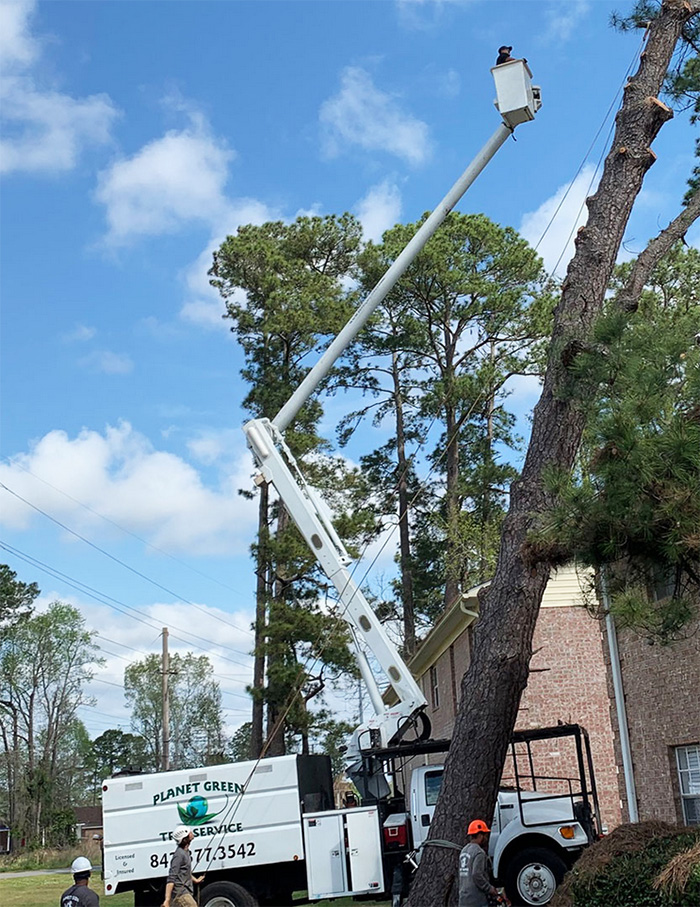
Whether your home has overgrown trees that need trimming or you have an unsightly stump that needs grinding, our team of tree experts is here to help. Curious what kind of tree care work we provide to homeowners in South Carolina?
Planet Green specializes in the following areas:
Tree Trimming in Sullivan's Island
Have you noticed your favorite tree growing in a strange shape? Are your trees or shrubs so overgrown that it's making your property and home look unkempt? Are the trees near your home weighed down by dangerous dead branches? If you answered yes to any of the above questions, it might be time to speak with a Planet Green Tree Service professional to find a solution.
Like anything that lives, trees respond to their environment. When trees are not properly maintained, they can cause a whole host of problems for the homeowner. Overgrowth doesn't just look bad - it can be a potential safety hazard and liability for your home. To prevent this from happening, it's crucial that your trees are trimmed and pruned regularly. Trimming your trees and shrubs gives your home a tidy, appealing look and facilitates healthy plant and tree growth.
Because every tree and shrub is different, you must approach tree trimming with a plan. Before you start hacking at your trees with a machete, be sure to contact Planet Green Tree Service. Our team of expert arborists will come to your home and determine the best path to take for your tree trimming needs. We always take into account variables like the strengths, weaknesses, and species of your trees.
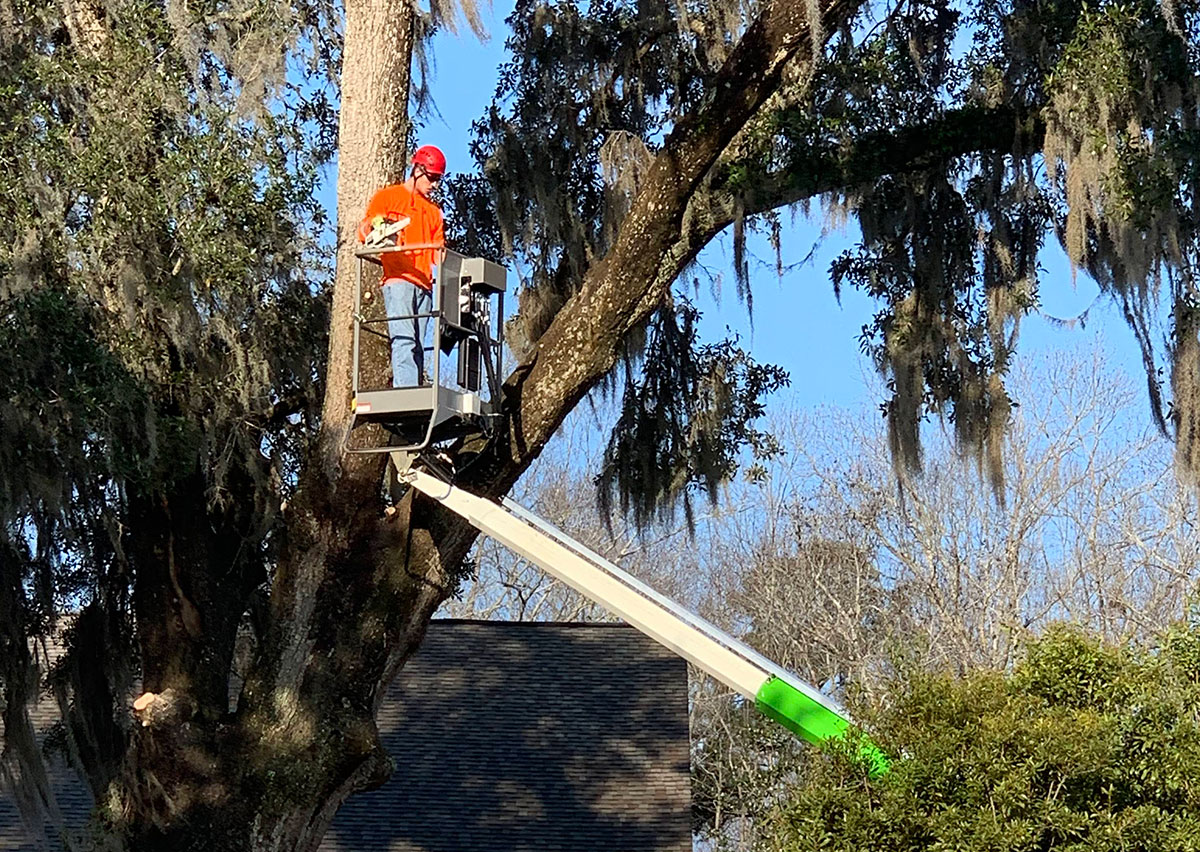
Benefits of Tree Trimming in Sullivan's Island
For some folks, tree trimming seems like a minor detail in the grand scheme of homeownership. It can be a tedious job, but keeping your trees trimmed and well-maintained is more important than you might think. Below are just a few of the many benefits of keeping your trees and shrubs trimmed:

Tree Health
Part of the Planet Green pruning and trimming process includes the removal of damaged, broken, dead, and diseased branches. When ignored, these dead or dying branches can cause harmful fungi to wreak havoc on the trees around your home or business. Removing these weakened branches helps prevent fungi and keeps your trees healthy. In addition, tree trimming also lets more sunlight and air circulation reach your trees, boosting overall health.

Safety
As longtime residents of South Carolina, we know how dangerous hurricanes and heavy storms can be. Strong winds from these natural occurrences can cause branches to fall or even be carried away with significant force. This is concerning for many homeowners, especially those who have trees lining their driveways, recreational areas, and walking paths. When you trust Planet Green with your trimming needs, you are actually doing your part to "storm proof" your home from hazardous tree-related accidents. If you have low-hanging branches close to your roof or business, pruning these trees can provide more safety and overhead clearance. That way, don't have an anxiety attack every time a storm rolls through your neighborhood.

Aesthetics
Nobody likes the look of an overgrown, disheveled tree. Tree trimming improves the general appearance of your tree and makes your whole yard and home look better. Tree trimming also prevents your trees from growing weak branches and crotches and helps stop branches from intertwining with one another.

Developmental Tree Trimming
Pruning younger trees is key to protecting them as they age. This vital tree service in Sullivan's Island keeps young trees aesthetically appealing and promotes proper structural integrity and optimal branch structure. In addition, as your home's landscape matures, taking the time to trim young trees reduces the chance of expensive problems like tree failure.
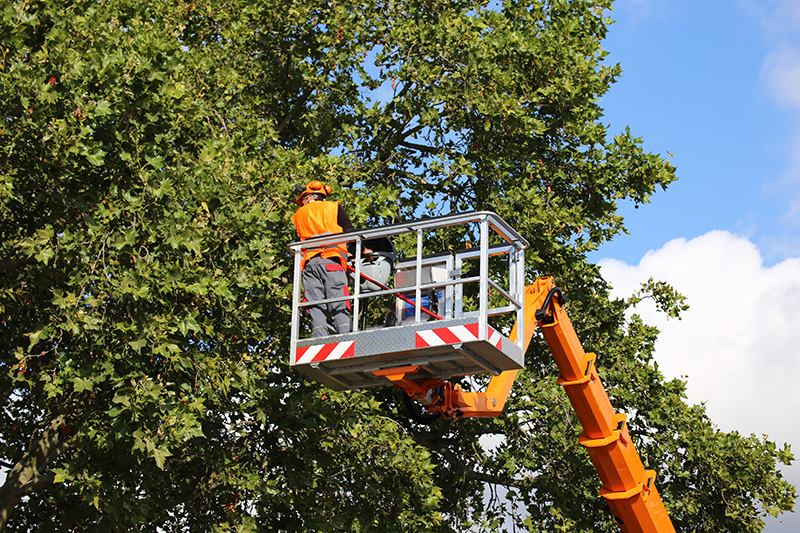
Types of Tree Trimming
Not all tree trimming services from Planet Green Tree Service are the same. Our experts specialize in a number of different tree trimming services to ensure you are getting the right kind of trim for the appropriate situation. Because even the smallest mistake can permanently affect your tree's health, we approach every tree trimming job with surgeon-like precision. That way, you know your trees are in capable, responsible hands.

Crown Reduction
When your trees age without the proper kind of care, they can develop too many branches on their interior. Trees like this give great shade, but too much is not a good sign. That's where crown reduction trimming comes in. By reducing the density of your tree's crown, our tree care experts improve its growth rate and health. Crown density reduction also promotes a longer lifespan and a more beautiful appearance.

Deadwooding
As the name implies, deadwooding involves the trimming of dead wood from your trees. Often required in urban and suburban areas, deadwooding a tree makes it look more attractive and livelier, while maintaining the health of your tree's trunk by removing rotted branches. This process also makes it safer for kids and other people who walk underneath or near your tree that may be harmed by rotting branches that fall. Other tree trimming services that Planet Green offers include: hazardous tree assessments, shrub trimming, pruning, cabling, bracing, and corrective trimming.
Stump Removal in Sullivan's Island
For most property owners, removing a tree can seem like a major project. While that notion certainly isn't wrong, tree removal is more straightforward and often easier than trying to remove an unsightly stump from your yard. Have you ever wondered why you see so many yards with stumps dotted around the land? It's because they're very difficult to remove. That is why Planet Green Tree Service has been offering stump removal services in South Carolina for more than 33 years. Our skilled stump removal experts bring a wealth of knowledge and cutting-edge tools to every stump removal project they tackle.
The fact of the matter is this: trying to remove a stump on your own is an incredible undertaking. Going the "DIY" route can take weeks to complete, even if you spend an hour or two every day. There's also the issue of operating heavy machinery (which costs time and money to rent) and even light fires to expedite the process, which is dangerous. For these reasons alone, we always recommend that you bring in a professional to remove your tree stump safely and effectively.
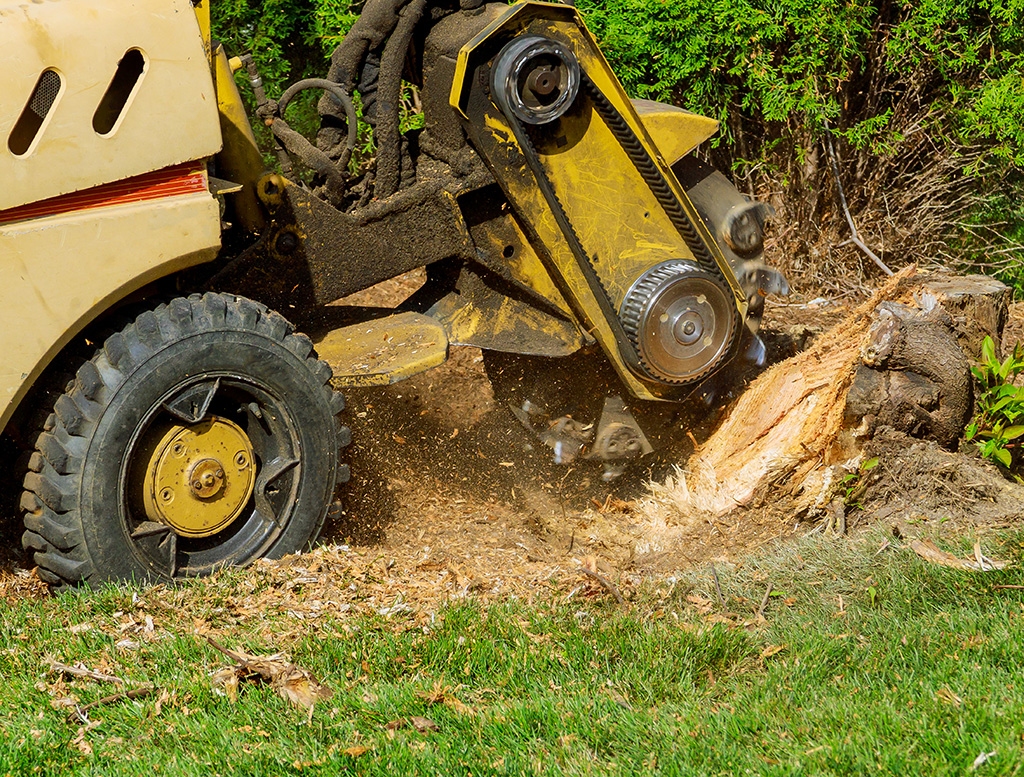
Benefits of Stump Removal in Sullivan's Island

Better Looking Yard
If you are a homeowner that loves sculpted hedges, beautiful landscaping, and a tidy law, removing old tree stumps will feel like a huge weight off of your chest. Stump removal not only gives your home more curb appeal, it can actually raise the value of your home. This is particularly pertinent if you are thinking about listing your home for sale in the near future.

More Space
If your yard is small, even one stump can reduce the amount of space you have in your yard. If you spend a lot of time playing sports or just enjoying your yard space, stump removal is a huge help. After all, nobody wants to toss a football around if there are a bunch of old stumps that you must avoid. Stumps also take up considerable space below ground, with their complicated root systems. Stump removal will give you and your family more room to plant flowers, grow vegetables, install a water feature, and much more.

Eliminate Unwanted Growth
When you leave a tree stump in your yard, you could be setting yourself up for unwanted tree growth. This kind of new growth often results in clusters of small trees popping up around the base of the stump. This problem isn't just unsightly; it can be harmful to any plants near the stump because the new trees will suck up all the water and nutrients out of your soil.

Pest Prevention
Tree stumps are notorious for harboring all sorts of pests that can damage your hard and cause expensive problems in your home. We're talking wood borers, ants, termites, and beetles. If you want to do away with these pests and protect your home, the best course of action is to contact Planet Green Tree Service for a quote on our professional tree removal services.
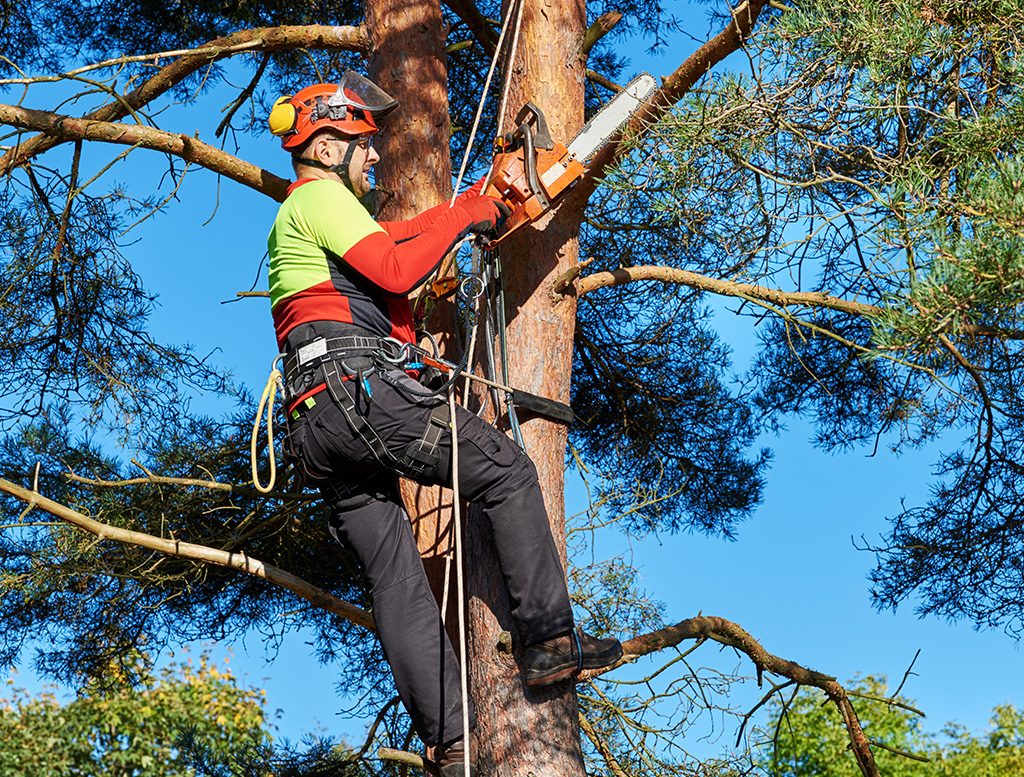
Reduce Headaches
Sure, you could take the time to do your research on how to remove a stump. You could go to Home Depot, rent a high-powered stump grinder, and risk your health trying to operate it without training. You could spend every winking moment of your free time trying to grind the stump down so you can remove it from your yard. But why go through all that trouble when a trustworthy, experienced stump removal company like Planet Green Tree Service is only a phone call away?
Our team of stump removal professionals uses state-of-the-art tools designed to keep your property damage-free during the removal process. We will turn your yard into a beautiful blank slate, so you can focus on enjoying your stump-free while we haul away all the debris.
Your Premier Tree Service Company in South Carolina
With 33 years of experience, it's no wonder why so many South Carolina locals choose Planet Green Tree Service for tree trimming and stump removal in their city. Clients love us because we believe in exceeding your expectations, no matter how large or small a job is.
- Conduct themselves in a professional manner
- Provide you with exemplary tree care services
- Arrive at your home or business on time and ready to work
- Provide you with affordable service rates
Contact our office to learn more about our tree services in South Carolina or to schedule your free quote today!
Latest News in Sullivan's Island, SC
Historic Sullivan's home sells for $9M; 1,600-acre development on the way
Teri Errico Griffishttps://www.postandcourier.com/business/charleston-sullivans-island-new-home-sale-jewelry-summerville/article_831280e0-e52e-11ee-b05a-f37ca4dffa56.html
A Sullivan’s Island home with historical significance predating World War II has sold for $9 million.The five-bedroom, 3.5-bath, 7,344-square-foot residence at 1702 Ion Ave. was originally built as the Base Commandant’s Quarters and is one of the most elaborate surviving structures at Fort Moultrie, according to Charleston real estate company The Cassina Group.The home became the residence of Gen. George C. Marshall, chief of staff during WWII who w...
A Sullivan’s Island home with historical significance predating World War II has sold for $9 million.
The five-bedroom, 3.5-bath, 7,344-square-foot residence at 1702 Ion Ave. was originally built as the Base Commandant’s Quarters and is one of the most elaborate surviving structures at Fort Moultrie, according to Charleston real estate company The Cassina Group.
The home became the residence of Gen. George C. Marshall, chief of staff during WWII who was appointed by President Franklin D. Roosevelt to help the Army prepare for war and coordinate allied operations overseas.
Jimmy Dye, founding partner and broker in charge, represented the sellers, said the home has a “rich history and timeless elegance.”
Though not quite the island’s priciest transaction — that remains with the $10.1 million sale of 2411 Atlantic Ave. in March 2023 — the deal punctuates not only the growing interest in Sullivan’s but in high-value homes, Dye said.
The home went under contract within seven days, enhanced by its unique features of tin-printed ceilings, a renovated kitchen, private pool, multiple fireplaces and large wraparound porches.
The buyer was not identified. The sellers were Charles Stockdale and Caroline Stockdale, who had owned the home since 2015, according to public land records.
New neighbors
A North Charleston shopping center is getting a boost with two new tenants.
Spinx plans to add a new training office at 5101 Ashley Phosphate Road, within the Festival Centre retail complex.
iHeart CBD is planning to open a shop in the same center. With plenty of retail spaces currently up for grabs, Festival Centre is home to other tenants such as CVS, AutoZone, Pizza Hut and two banks.
Closing time
A controversial large-scale residential development in Dorchester County is moving forward.
Buller River Development, Land and Investment, based out of Fort Mill, said it has purchased the property for its planned 1,600-acre Yerby Road project in Summerville.
The transaction is one of the largest residential land purchases in the Charleston region in 15 years, the company said.
Plans include potentially adding more than 1,700 new homes to the area, which residents have pushed back on for years because of environmental concerns.
Public land records show the Bullard has acquired numerous parcels from multiple sellers this year for $29 million under the name BRD Land & Investment. The county approved the development agreement in December.
Nexton offices
Construction has started on a new office complex in Summerville.
The first building is underway at Atelier Downtown Nexton, a 7.5-acre office development on Brighton Park Boulevard off U.S. Highway 17A. Planned by an affiliate of New Jersey-based Sharbell Development, the project will include multiple two-story buildings up to 18,000 square feet.
Hill Construction has started work on the first structure with the second expected to break ground in April. Simultaneously, Hill is in the final stages of construction for a 114,000-square-foot mixed-use/multifamily project in Downtown Nexton for Sharbell. The five-story building includes four floors for apartment living and a 24,000 square feet of ground-floor retail and restaurant space.
On the block
A vacation rental home is on the market in downtown Charleston’s French Quarter neighborhood.
Built in 1871, the Charleston Chestnut Mansion at East Bay and Guignard streets is ready to change hands for $8.25 million. The 8,700 square-foot-property renovated in 2021 has four suites approved for vacation rentals, according to Ryan Carmody and Charles Carmody of the real estate firm CBRE.
Our twice-weekly newsletter features all the business stories shaping Charleston and South Carolina. Get ahead with us - it's free.
Charleston Water System responds to Sullivan’s Island Council decision amid contract dispute
Jordan Cioppahttps://www.counton2.com/news/charleston-water-system-responds-to-sullivans-island-council-decision-amid-contract-dispute/
SULLIVAN’S ISLAND, S.C. (WCBD) – The future of water service on Sullivan’s Island remains uncertain amid a contractual dispute between the town and Charleston Water System.“The island has the ability to generate taxes and they need to figure it out because what they did in 2017 was, they just quit paying,” said Sullivan’s Island resident, Dave Spurgin.A 30-year water supply contract between CWS and the Town of Sullivan’s Island went into effect on July 19, 1994.Based on letters p...
SULLIVAN’S ISLAND, S.C. (WCBD) – The future of water service on Sullivan’s Island remains uncertain amid a contractual dispute between the town and Charleston Water System.
“The island has the ability to generate taxes and they need to figure it out because what they did in 2017 was, they just quit paying,” said Sullivan’s Island resident, Dave Spurgin.
A 30-year water supply contract between CWS and the Town of Sullivan’s Island went into effect on July 19, 1994.
Based on letters provided by CWS, there has been a disagreement over the rates since 2017. The water system claims the town owes them $1,078,000 as of last month.
“Years ago, Charleston Water System decided to raise our rates as if our signed contract did not exist. The town disputed that rate increase and has continued to pay the undisputed amount owed in accordance with our longstanding signed agreement,” said Sullivan’s Island Town Councilman Justin Novak on Monday night during a special council meeting.
The statement was part of a longer motion read aloud before council voted to pay $227,361 to satisfy the disputed portion of the amount owed. Island leaders said the amount was calculated by a nationally recognized rate consultant.
CWS CEO Mark Cline released the following statement to News 2 on Tuesday.
“Charleston Water System does not agree with the Town of Sullivan’s Island’s viewpoint or its recollection of the historical facts. We fully intend to discontinue the Town’s water service July 20 unless their past due amount is fully paid and they have entered into a new contract that appropriately covers the costs of providing water service to their community. It’s not fair that our other customers have been subsidizing the Town’s service for years now, and that would continue under their terms.”
Spurgin, who has lived on Sullivan’s Island for nearly 30 years, said he is not concerned about the potential water shut-off.
“No, because we’re going to need our water. They’re not going to shut the water off. The town’s going to have to figure out, the town council is going to have to figure out how to come up with the money,” Spurgin told News 2.
Sullivan’s Island Mayor Pat O’Neil released the following statement.
“Apparently CWS is having very-late-onset buyer’s remorse about a legally binding contract they willingly entered into almost 30 years ago. When we entered into this agreement in the aftermath of Hurricane Hugo, the Island was at one of its most vulnerable points in its centuries-long history. Nonetheless we have abided by the language of this contract. It’s hard to accept that CWS (or anyone else) is “subsidizing” SI when we paid almost $2 million (in 1994 dollars) to support the infrastructure that allowed them to sell water to us and to our neighbors on the Isle of Palms, and when in 2020 we gave them an easement through our public park and playground so there would be additional capacity to sell water to our neighbors in Mount Pleasant.”
Sullivan’s Island agrees to pay $227k amid contract dispute with Charleston Water System
Jordan Cioppahttps://www.counton2.com/news/sullivans-island-agrees-to-pay-227k-amid-contract-dispute-with-charleston-water-system/
SULLIVAN’S ISLAND, S.C. (WCBD) – The Town of Sullivan’s Island has agreed to pay just over $227,000 to Charleston Water System amid a contract dispute.Sullivan’s Island Town Council spent almost an hour in an executive session on Monday night while they received legal advice on contractual negotiations with Charleston Water System.“That signed contract constitutes a valuable asset of the town and provides certainty regarding the rates that our residents pay for water. Years ago, Charleston Water Sy...
SULLIVAN’S ISLAND, S.C. (WCBD) – The Town of Sullivan’s Island has agreed to pay just over $227,000 to Charleston Water System amid a contract dispute.
Sullivan’s Island Town Council spent almost an hour in an executive session on Monday night while they received legal advice on contractual negotiations with Charleston Water System.
“That signed contract constitutes a valuable asset of the town and provides certainty regarding the rates that our residents pay for water. Years ago, Charleston Water System decided to raise our rates as if our signed contract did not exist,” said Town Councilman and Mayor Pro Tem Justin Novak, as he read aloud a lengthy motion upon council’s return to open session.
As News 2 reported last month, Charleston Water System claimed in an October 2023 letter to the town that Sullivan’s Island has been paying less than the correct rate since 2017. A spokesperson for CWS said the town owed $1,078,000 as of the beginning of March.
The letter also said the 30-year contract between CWS, and the town will expire on July 19, 2024 and if there is not a new contract by then, water service will be disconnected for the town’s 2,000 on July 20th.
“The town disputed that rate increase and continued to pay the undisputed amount owed in accordance with our longstanding signed agreement and placed the disputed amount in escrow pending the resolution of that dispute,” Councilman Novak read.
Sullivans-Island-Town-Council-Motion-4.1.24Download
He continued with the motion and said CWS is ignoring the other terms and stated the town would not accept any of the water system’s proposals in the contractual dispute.
“The town must stand firm that signed contracts are signed contracts,” the councilman said as part of the motion.
The town used who leaders said is a nationally recognized rate consultant to calculate what they owe.
“Accordingly, I move that town council authorize the payment of $227,361 to satisfy in full the disputed portion of arrearage now calculated to be owed under the terms of our written agreement with Charleston Water System,” Councilman Novak finished.
The motion passed unanimously. News 2 reached out to Charleston Water System after the meeting. A spokesperson said they are evaluating the action taken.
Charleston businesses cleaning up after winds, flooding cause damage
Carlie Bakerhttps://www.live5news.com/2024/03/10/lowcountry-businesses-cleaning-up-after-winds-flooding-cause-damage/
CHARLESTON, S.C. (WCSC) - From West Ashley to Sullivan’s Island, businesses spent the day recuperating after heavy rains and strong winds caused them to temporarily lock their doors.Many of the exterior windows at Hay Tire Pros, off Savannah Highway, shattered, and a large part of their ceiling collapsed on the inside.Vice President Bill Sekula said that they have always expected severe storms to come through with being in Charleston, but that they have never had this much damage before.“I guess it was like a...
CHARLESTON, S.C. (WCSC) - From West Ashley to Sullivan’s Island, businesses spent the day recuperating after heavy rains and strong winds caused them to temporarily lock their doors.
Many of the exterior windows at Hay Tire Pros, off Savannah Highway, shattered, and a large part of their ceiling collapsed on the inside.
Vice President Bill Sekula said that they have always expected severe storms to come through with being in Charleston, but that they have never had this much damage before.
“I guess it was like a microburst or something to that effect, but apparently it was raining harder than usual and then the windows started to buckle and snapped over. These windows on the side just kind of came apart and came out of the building,” Sekula said.
Sekula said glass from the windows was even in the back part of their building which is almost 30 yards away. They had to close the business for the day and return all of their customers’ vehicles. He said the incident happened during hours of operation as employees notified him at around 8 a.m.
The next-door business, Etto Leisure Cars, a golf cart dealer, also saw significant damage. Will Harton, chief executive officer, said that part of their awning was ripped off and hit their power box causing them to lose power.
“I said ‘Oh my goodness.’ You know, you live in Charleston long enough, you know a storm is going to happen. Usually, it’s a hurricane. It’s not a microburst like this, but we will be fine and we will move on from here,” Harton said.
He added that he’s glad that all of his employees are safe and that the building and golf carts can be fixed.
First Alert Chief Meteorologist Bill Walsh said the damage could have been from a potential microburst or straight-line wind, but the National Weather Service has not yet confirmed that.
The Co-Op Frosé and Eatery on Sullivan’s Island had around two feet of water inside their restaurant. Their staff members spent the day using buckets to help get rid of the water. They said they have had flooding in the past, but never anything over a foot, so this is the worst they’ve seen.
“This morning, we lifted everything off the floor because we were expecting rain and heavy floods, but we didn’t know it was going to get this bad. So, as we were lifting things off the floor, it started coming in through the back door. Next thing you know there is water all over the place and we started getting buckets and mops and throwing water out. We’ve been throwing water out for the past three and a half hours,” employee Havannah Malan said.
She said that they have had to get their floors redone three times, and she expects the business will have to get them redone a fourth time after Saturday’s flood.
The businesses said they hope to repair the damages quickly, so they can return to normal operation as soon as possible.
Copyright 2024 WCSC. All rights reserved.
Sullivan’s Island at risk of losing water if water expense debt isn’t paid
Anna Harrishttps://www.live5news.com/2024/03/25/sullivans-island-risk-losing-water-if-water-expense-debt-isnt-paid/
SULLIVAN’S ISLAND, S.C. (WCSC) - A yearslong dispute between Sullivan’s Island and the Charleston Water System could leave thousands of residents without water starting in July if over $600,000 in debt is not paid.As of Sept. 28, 2021, Charleston Water System claims Sullivan’s Island owes them $197,468 in billed, but unpaid, volumetric charges and $442,478 in billed but unpaid capital charges.Charleston Water says the town changed how much they paid per 1,000 gallons in 2017, even after paying the same amount ...
SULLIVAN’S ISLAND, S.C. (WCSC) - A yearslong dispute between Sullivan’s Island and the Charleston Water System could leave thousands of residents without water starting in July if over $600,000 in debt is not paid.
As of Sept. 28, 2021, Charleston Water System claims Sullivan’s Island owes them $197,468 in billed, but unpaid, volumetric charges and $442,478 in billed but unpaid capital charges.
Charleston Water says the town changed how much they paid per 1,000 gallons in 2017, even after paying the same amount since the contract began in 1994.
They say that the paid charge went from $1.22 per 1,000 gallons to 88 cents per 1,000 gallons.
Charleston Water wrote in a January 2019 letter that “after more than 20 years, the town of Sullivan’s Island does not believe the contract requires them to pay any portion of Charleston Water’s capital expenses, a belief which has no support whatsoever of our board of commissioners or legal counsel.”
After getting a rate consultant, Charleston Water offered Sullivan’s to pay 89 cents per 1000 gallons. According to numerous letters, the island refused.
An opinion from the state Attorney General in 2019, states Sullivan’s Island does not have the authority to interpret contracts, but believes both of these parties must finish their initial term of 30 years and then they are able to terminate it if everyone is notified.
Sullivan’s Island says they disagree with this opinion and there are four unresolved topics between the two: capital charges, fire hydrants, the municipal wholesale rate as an excess demand charge and the rate formula.
Charleston Water says Sullivan’s Island has two choices: to pay all outstanding balances and they can continue to purchase water at the then-published municipal whole rate or find an alternate water source starting July 20 of this year.
In a 2021 resolution from Charleston Water, they say they discovered through this lack of payment that 18 fire hydrants were not being paid for on the island. If they’re not paid, all will be removed except for those used for water main flushing.
Starting this month, they will send out delinquent notices to DHEC, the State Fire Marshal, Sullivan’s Island residents and other state agencies on a monthly basis that the water will be shut off starting July 20 – when the 30-year contract is up – if this procedures are not followed.
In response to these letters, Andy Benke, the town administrator for Sullivan’s Island, provided this statement:
It’s disappointing that the leadership at Charleston Water System has apparently decided to ignore the confidentiality agreement put in place during the mediation of our long-standing dispute.
Years ago, CWS decided to raise our rates as if our signed contract with them did not exist.
As CWS knows, we’ve simply been continuing to pay the undisputed amount set in our long-standing, signed agreement.
We hope everyone will understand we’re standing firm on the principle that signed contracts are signed contracts. It’s the right thing to do for our citizens.
We will continue our good faith efforts to reach an appropriate agreement through mediation, or if need be, in the court.
Charleston Water claims Sullivan’s Island revised its interpretation of the 1994 agreement in 2016 and part of the dispute is whether the island should have to pay any portion of CWS’s capital expenses.
Charleston Water System says they can’t make any further comment because it’s still in legal mediation.
You can read more about the dispute below, or click here.
Copyright 2024 WCSC. All rights reserved.
Disclaimer: